Remember the Alamo

joecampbellart's avatarjoecampbellart

alamo post

Remember the Alamo: watercolour, 30″x 40″

This is the cover artwork for my book, Crossing Borders. The image is accompanied by a poem Recreational Rioting and is about the macho nature of street riots in the early 1970s in Derry, N.Ireland. The riots would sometimes be suspended so that rioters could go home to watch something good on TV. In this case The Alamo, the movie starring John Wayne…

View original post

Remember the Alamo

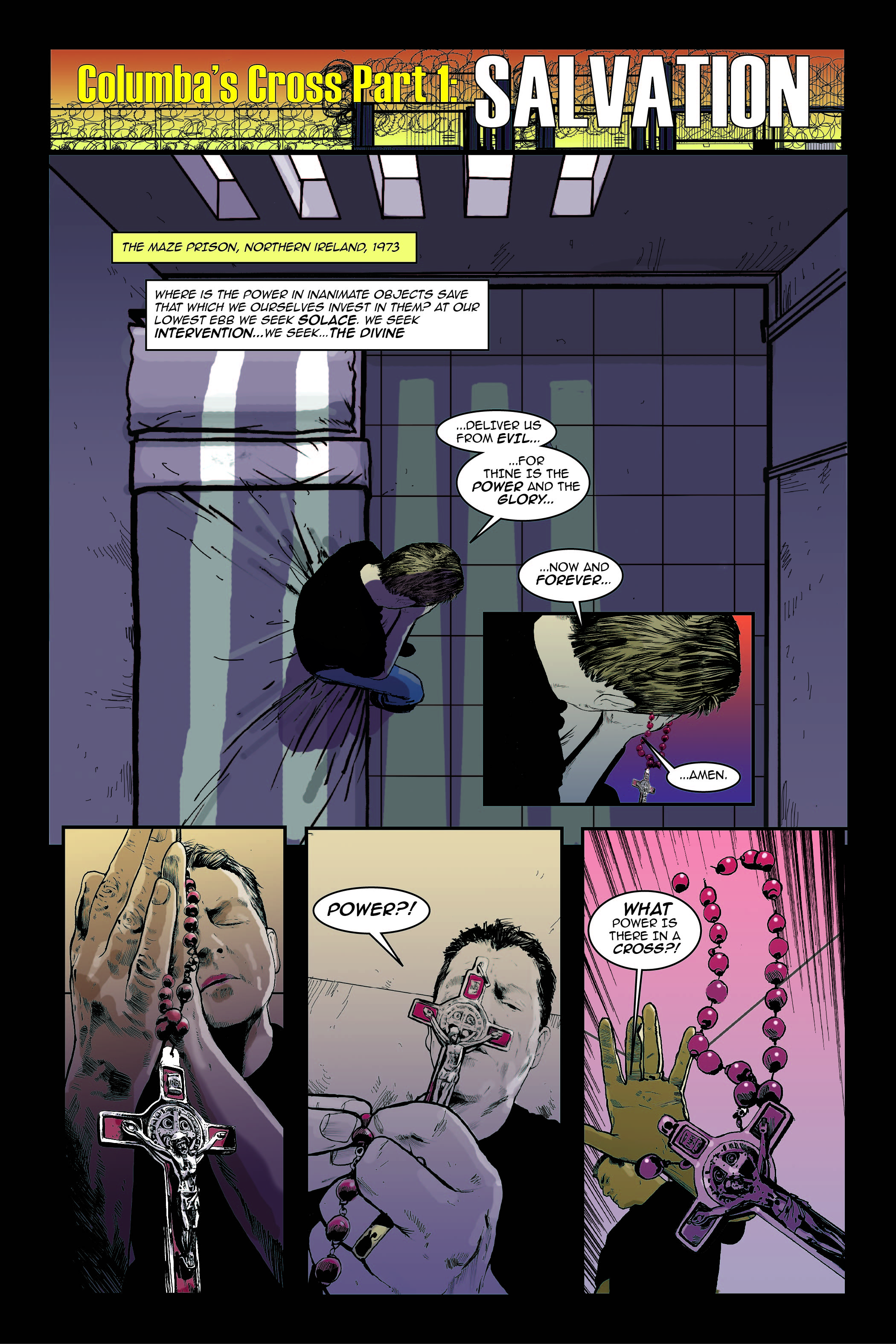
Graphic Novel: Columba’s Cross, Comic book art

NEW COLUMBA PAGE 1 copy

These are the first few opening pages of a graphic novel I’ve been working on for quite some time. I was thinking of bringing this out as a series of 24 page episodes. The story is set in the Northern Irish Troubles of the early 1970s. The main character, Colm O Neill, brutalised by the conflict, joins the IRA. During an attempt to ambush The British Army he comes across an old gold cross in a graveyard…what happens next is out of this world…Enjoy the first four pages…

NEW COLUMBA PAGE 2 copy

NEW COLUMBA PAGE 3 copy

NEW COLUMBA PAGE 4 copy

Graphic Novel: Columba’s Cross, Comic book art

RECREATING AN OLD MASTER 4: VELASQUEZ, CHRIST CRUCIFIED, OIL ON CANVAS

PAGE 9 OIL MATERIALSPart 4

Oil Painting

Above are the types of brushes, mediums and oil paints that would suit this type of highly figurative painting style. In the illustration I have included student colours. These really are not ideal for this commission but may suit the pocket of most poor starving art students. Ideally you should never scrimp on materials especially paints.The more expensive a colour the more pigment or actual colour it contains. This will make your work look and feel so much more professional and finished.

Oil paints are thinned and diluted with certain mixtures that can give your colours more flow and allow them to mix and blend better. This is known as adding medium. I use two mediums, one for cleaning paint off the brushes and one for mixing with paints. Try to keep your brushes clean at all times. Wipe excess oil paint off them with a clean rag or paper towels. Dirty paint will transfer to your painting. I use a mixture of; 60-70%Turpentine: 20% Linseed Oil for your paint medium.

olis 1

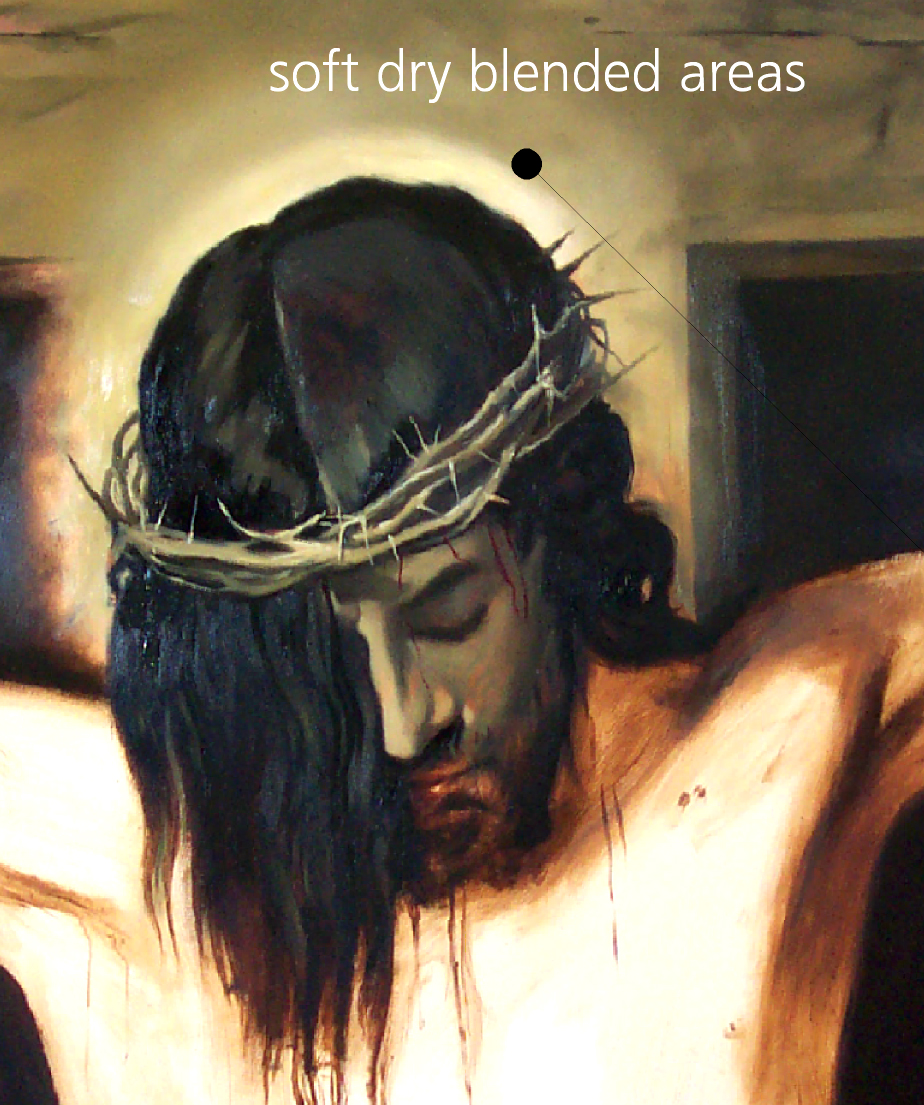
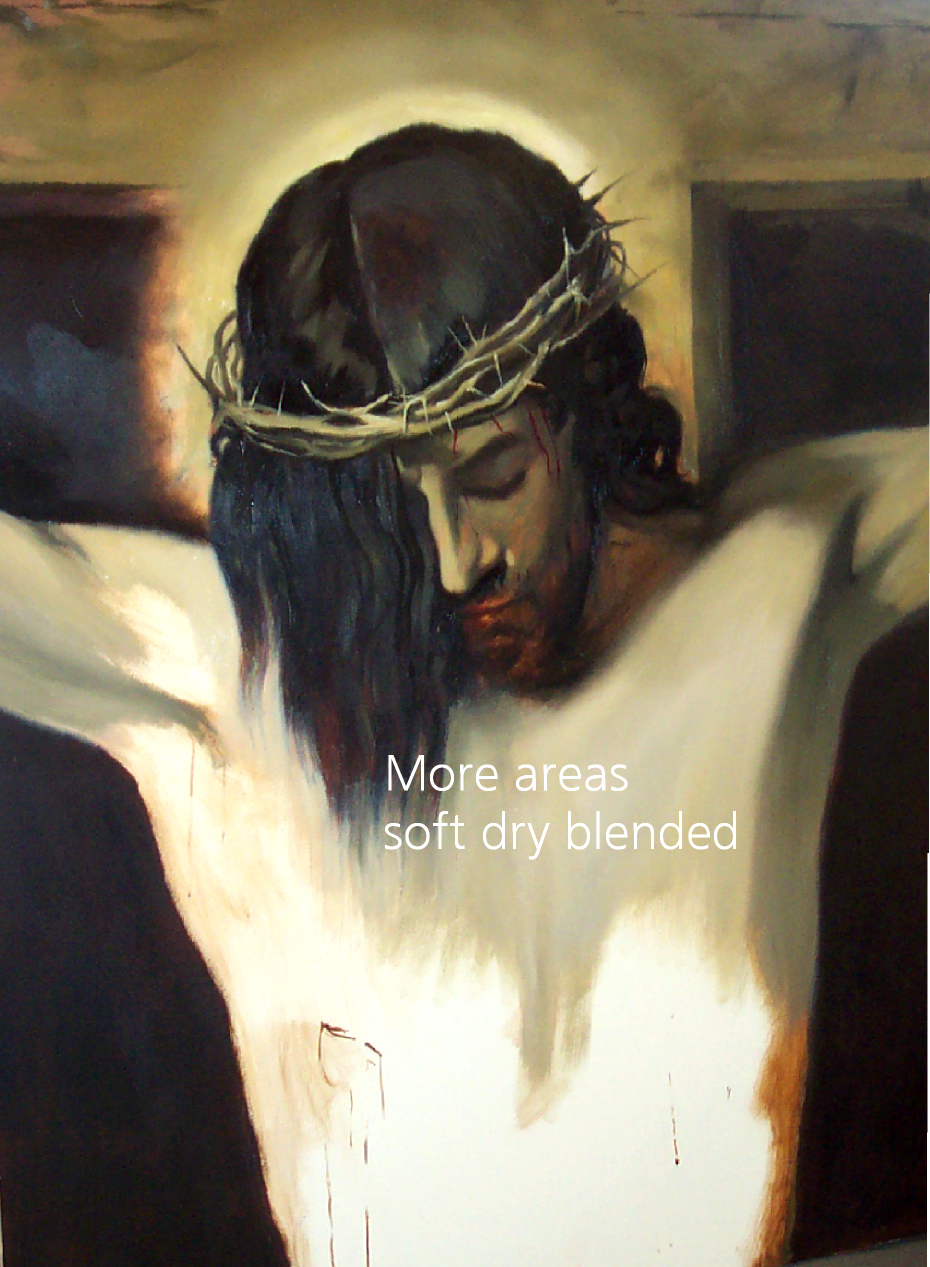
There is no hard and fast rule but in this case I would use softer brushes, more sables or Dalons than hogshair. The secret to really fine, realistic painting is not just to use broad smooth brushwork but to “soft dry blend” with a dry soft brush as you go along. This is a real secret and something that took me years to discover on my own. This one thing will transform your painting. Rule 1: AVOID HARD EDGES! Blend areas of paint together as you go along with dry soft brushes (brushes with nothing on them) This is a technique that Leonardo used He gave it the name of sfumato or “smoke-like”. If you want to study this technique take a look at The Mona Lisa with fresh eyes. I defy you to find a hard line. This is also science. Light diffuses hard edges. if you use this technique your work will appear so much more “realistic”.

The rule with areas of colour when starting out is “work broad to narrow”. This means start with large areas of mid-toned colour. For instance, in the case of the flesh tone, mix up a lot of light toned colour on your palette. The flesh tone I use here is made up from the following:

65% Titanium White: 10% Standard Flesh Colour: 10% Yellow Ochre: 5% Alizarin Crimson: 5% Burnt Umber: 5% Dioxazine Purple.

This mixture is not hard and fast but should give any student a good flesh tone. To tint (or lighten) it you add more Titanium. To shade (or darken it) add more Burnt umber But, be careful not to add any white straight with another colour only. What happens is a “chalkiness” can build up in your painting that’s difficult to remove.

I also mix up a “black”. This is: 65% Burnt Umber: 35% French Ultramarine. Experiment with these two percentages until you get the “Black” you are looking for. This can be mixed in with the flesh tone to create a large range of shades from black up through dark brown to dark flesh tones.

But remember, broad to narrow. Look at the original more than half of the painting is a dark black-brown colour. That’s it! that’s half the painting finished. I have trained my eye to look for these large tonal areas. paint these in first with a big brush. Remember Durer? “draw with a needle, paint with a broom” Big brushes to start with and keep blending. Here I am only recreating a pastiche of an original old master. At all times I have a high quality version of the original to hand to study. Even if you have to spend some money for an original high quality print it’s one of the best things you can do to make this copy a success. Can you imagine what it took to create the original?

Starting to paint 2

RECREATING AN OLD MASTER 4: VELASQUEZ, CHRIST CRUCIFIED, OIL ON CANVAS

RECREATING AN OLD MASTER 2: VELASQUEZ, CHRIST CRUCIFIED, OIL ON CANVAS

drawing

Part 2:

The Drawing

For the drawing, a common, labour saving method for transferring and scaling an accurate drawing on to a large board, is to project it using an overhead projector. The original is photocopied or Xeroxed on to a sheet of clear acetate. This is then placed on to an overhead projector and the image is projected on to the board. Because of this method I was also able to bypass using a pencil to establish the under drawing moving instead, straight on to the brown line stage.

Brown Line Under painting / Rigger Brush

I use a rigger brush to paint in a strong dark brown line drawing. A “rigger” is a long haired brush used by artists to draw long straight lines. It gets its name from marine painting where it was used to paint in the rigging of ships. Durer said “draw with a needle, paint with a broom” very good rules of thumb for painting and drawing.

An “under painting” is a strong lined drawing usually done with dark brown fast-drying acrylic paint (Burnt Umber) This is necessary for most oil paintings. Oil paints are opaque. If you apply them over a pencil drawing the pencil will no longer be seen. To avoid losing the guide that is the drawing, the artist should use an under painting. This much darker, stronger guide can still be seen when he or she starts to add in layers of colour over the top of the drawing.

drawing continued

Drawing Continued

Still using my Burnt Umber acrylic paint I continue to establish a strong brown line drawing outlining the main lines of the figure. Add plenty of water to the acrylic to achieve a good flow with the lines.

drawing 3

As can be seen in the photograph above, (still using the Burnt Umber acrylic) I began to use thin layers of paint with an 1″ brush over the top of the now dry brown lines. These little thin washes add to the drawing process, establishing shadows and highlights early on. Remember! In a project like this it is vital that the drawing be as detailed as possible. The drawing is your foundation and your only road map. Without a strong accurate drawing it will become nigh on impossible to continue the painting.

RECREATING AN OLD MASTER 2: VELASQUEZ, CHRIST CRUCIFIED, OIL ON CANVAS

Recreating an Old Master 1: Velasquez, Christ Crucified, oil on canvas

A 4158

The Painter

Diego Velazquez (1599 – 1660) was a Spanish painter who was the leading artist in the court of King Philip IV and one of the most important painters of the Spanish Golden Age. He was an individualistic artist of the contemporary Baroque period, important as a portrait artist. In addition to numerous renditions of scenes of historical and cultural significance, he painted scores of portraits of the Spanish royal family, other notable European figures, and commoners, culminating in the production of his masterpiece Las Meninas (1656).

The Painting

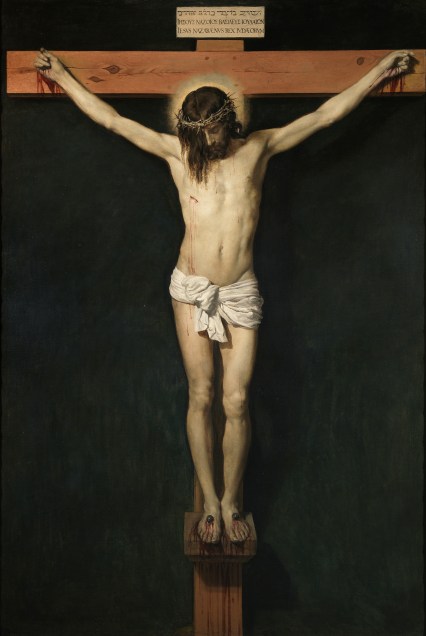
Christ Crucified is a painting of 1632 by Diego Velázquez depicting the Crucifixion of Jesus. The work, painted in oil on canvas, measures 98″ x 66″ and is owned by the Museo del Prado. Velazquez painted the crucified Christ using the accepted iconography of the period: four nails, feet together and supported against a little wooden brace, in a classic contrapposto posture.
Both arms draw a subtle curve, instead of forming a triangle. The purity cloth is painted rather small, thus showing the nude body as much as possible. The head shows a narrow halo, as if it came from the figure itself; the face is posed on the chest, showing just enough of his characteristics. The long, straight hair, covers a great part of the face, perhaps anticipating the death, already inflicted as shown by the wound on the right side. It lacks the characteristic dramatic qualities of Baroque painting. The influence of Classicist painting is shown by the calm posture of the body, the idealized face and the leaning head. On the other hand, the Caravaggism influence can be seen in the strong Chiaroscuro between the background and the body, and in the strong, artificial lightning over the cross.
It was most likely a commission for the San Plácido Convent sacristy. The painting was among the impounded items of Manuel Godoy, but was returned to María Teresa de Borbón, 15th Countess of Chinchón. After her death, the painting was passed on to his brother-in-law, the Duke of San Fernando de Quiroga, who gave it to King Fernando VII. The king then sent the painting to the Museo del Prado.

New Commission for St Eugene’s Cathedral, Derry, N.Ireland

In 2005 I was commissioned to recreate a version of Velasquez’s Christ Crucified for St. Eugene’s Cathedral in Derry. I decided that instead of the full painting I would focus in on a detail of the painting. This then would be the task…

The Detail

A 4158I

I began with establishing both the size of the painting and the “canvas”. In this case I decided to use MDF instead of canvas. The MDF (although heavier) once primed, would provide a flat untextured surface suitable for the accurate reproduction of such fine, intricate painting.

STEP 1: The Board/ Size/Priming.

The first step was to cut the standard 8ft x 4ft MDF sheet down to 4ft x 5ft. This would suit the selected detail. Next came priming. The boards were initially primed with three coats of Matt emulsion (same paint as used for home decoration). I allowed for at least two hours between coats. After which I then primed over the top of the emulsion with three more coats of white gesso. Gesso is the standard material used by artists to prime canvas. It is a mixture of chalk and gypsum with a binder. This would create a very smooth surface for painting.

priming

Recreating an Old Master 1: Velasquez, Christ Crucified, oil on canvas

Irish Landscape: Old Bridge at the Downings

Bridge at the Downings

I came across this small, old bridge in The Downings in County Donegal in Ireland. The flowers in the foreground really presented a chance to add colour to the scene. There was a mixture of rushes and wild flowers. If there was a stream still flowing under the bridge it was heavily overgrown. There was a marshy feel to the turf underfoot suggesting a bog and the trace of water which must have been here at some stage. The bridge itself looked really old. The stones had weathered creating textures. The background led to sandy dunes and down to a beach out of site of the picture…

Irish Landscape: Old Bridge at the Downings

Whoa Mr. President

Whoa Mr President

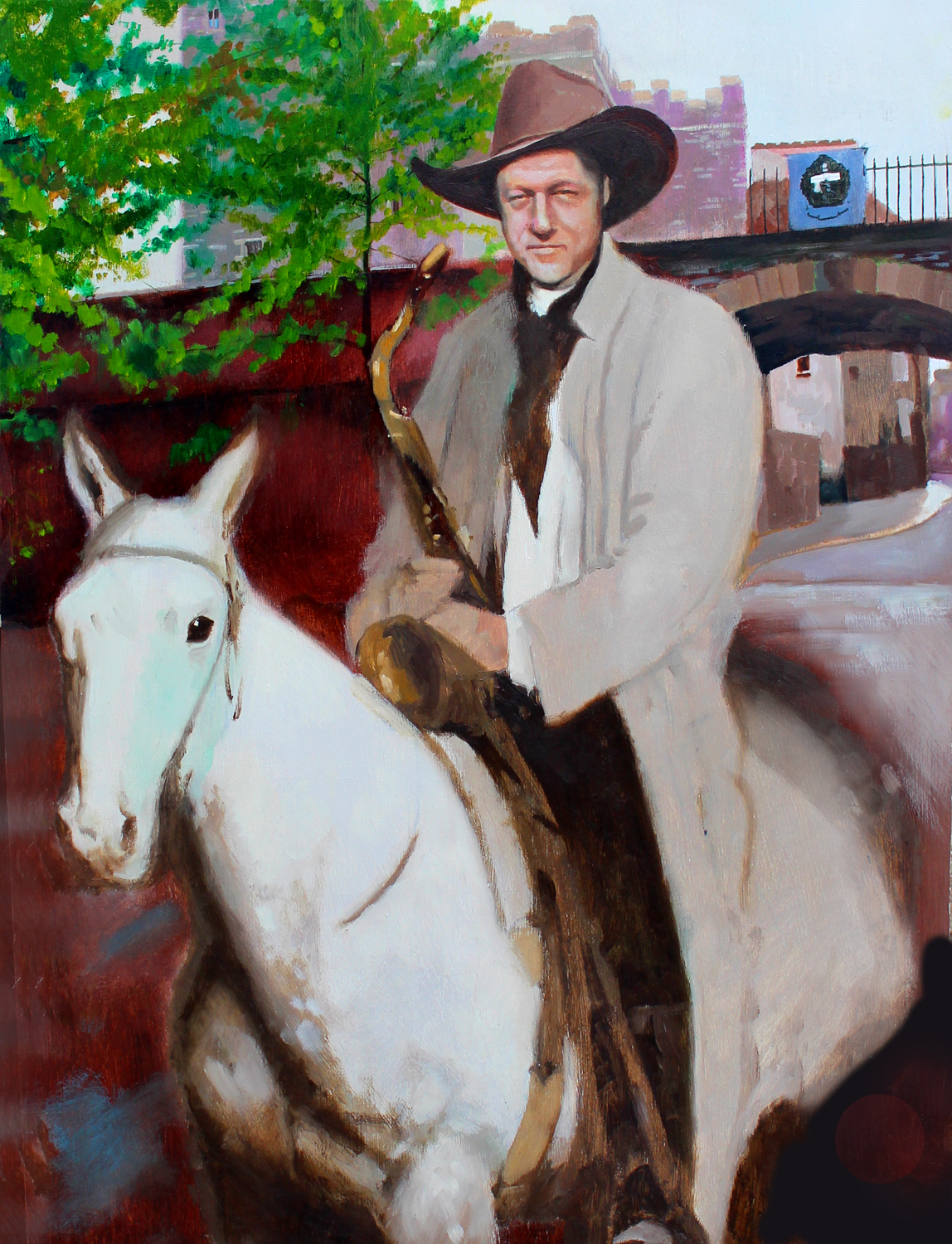
This painting was originally painted in 1995 to celebrate President Clinton’s (and Hilary’s) first visit to my home town of Derry, here in Ireland. This was a big deal at the time. I’m not sure most Americans get to see a serving president in their lifetime but we here in little Derry have had the pleasure of his company five times in twenty years.He first visited Derry in 1995 when he was President of the United States.During that visit, thousands of people turned out to greet him at Guildhall Square.

It was a chilly Thursday afternoon in November when the then President arrived in Derry city centre in a blaze of black limousines, American flags, tight security and rapturous applause.During his speech that day, he told the massed ranks in front of the Guildhall: “I came here because you are making a home for peace to flourish and endure.”He returned to Derry for a second time in the summer of 2001 and was back again two years later.On that occasion, he gave the inaugural lecture at the Tip O’Neill Chair of Peace Studies at the Magee campus of the University of Ulster.During his 2010 visit, again to Magee, he outlined his strategy to help lift the North out of its economic malaise.

Must be something in the air. I’m not sure what he would have made of this if he ever seen it…A good friend of mine, upon seeing it insisted on sending a photo of it to the Whitehouse. We never got a reply…

Whoa Mr. President

Remember the Alamo

alamo post

Remember the Alamo: watercolour, 30″x 40″

This is the cover artwork for my book, Crossing Borders. The image is accompanied by a poem Recreational Rioting and is about the macho nature of street riots in the early 1970s in Derry, N.Ireland. The riots would sometimes be suspended so that rioters could go home to watch something good on TV. In this case The Alamo, the movie starring John Wayne…

Remember the Alamo

Irish Landscape: Ancient Castle at Greencastle

Greencastle

The village of Greencastle is a commercial fishing port situated on the shores of Lough Foyle, on the north coast of Inishowen in County Donegal, Ireland. The village is about twenty miles north of the city of Derry with views across the Lough to the beautiful Magilligan Strand.

The name “Greencastle” comes from the ancient castle, built in 1305 by the Normans, the remains of which can still be seen there today and which form the subject of this painting.This dramatic scene and its two ruined towers forms not just one of Ireland’s most historic sites but also, a perfect subject for a painting.

The main focus of this composition is of course the castle. It fills about half of the entire canvas. I could have got further back but I felt that some of the finer detail and texture of the old weathered stone may have been lost. The castle almost seems to grow out of the ground. The long unkempt, windswept grass growing up the small mound that the castle sits upon lead the eye upwards. This painting is all about the foreground, all about the castle. I framed the scene in such a way that  the nearest, tallest tower forms a vertical line about one third the way across the painting. The eye sweeps up the tower and up into the foreboding dark grey sky. Then over, across the skyline to the sands of Magilligan Strand just visible across Lough Foyle and highlighted by sunshine that has managed to penetrate the threatening skies above. If you enjoyed this little taste of Ireland please remember to “Like” this post/site or recommend it to your colleagues, friends and family…


Go back

Your message has been sent

Warning
Warning
Warning

Warning.

Irish Landscape: Ancient Castle at Greencastle

Thistles & Wildflowers

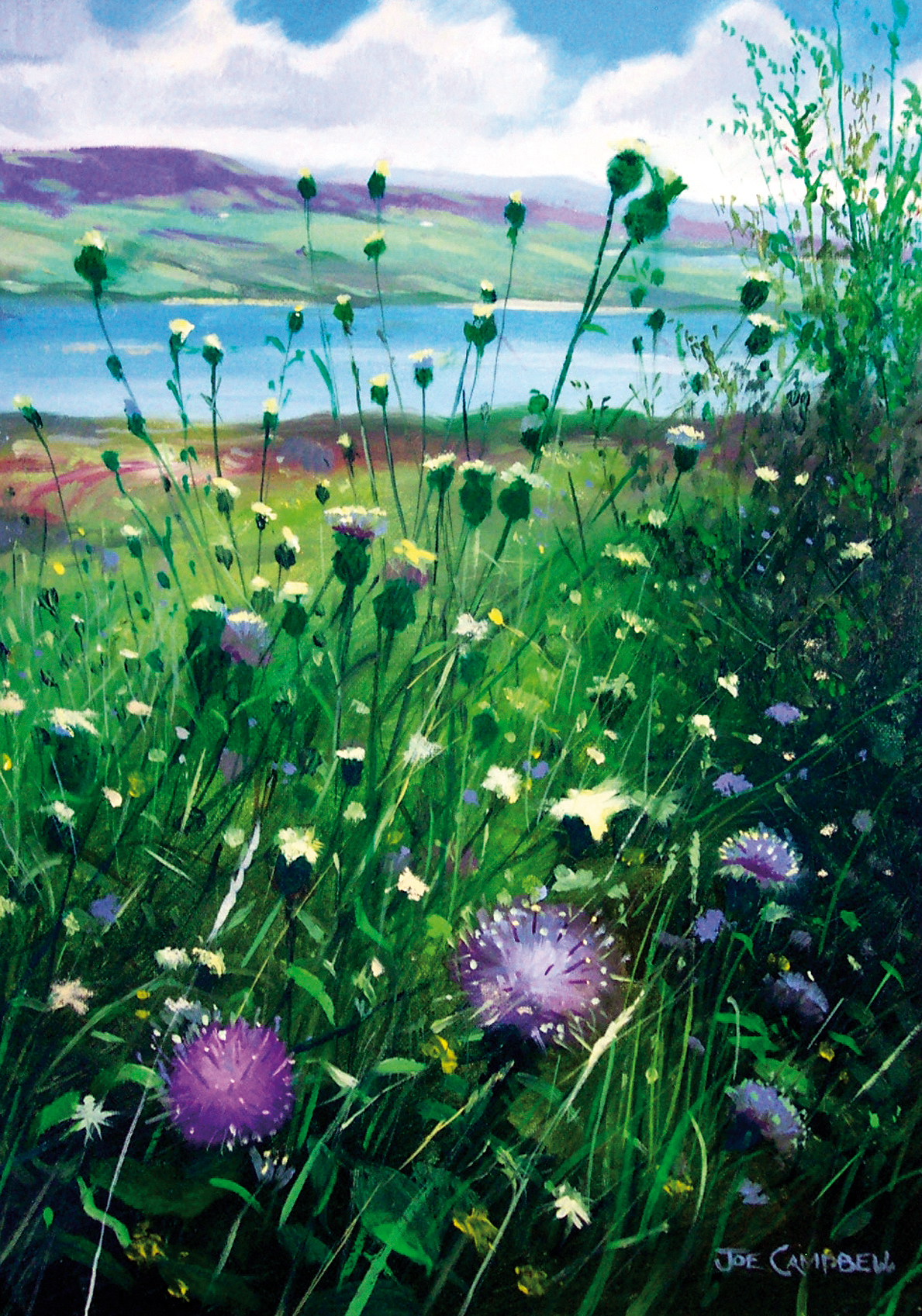
Wild Flowers at the DowningsThese beautiful wild flowers caught my eye. This painting is all about the foreground. The purple flowers contrasted with the yellow buttercups and daisies and the surrounding greenery. This is really a natural snapshot of a place. This was captured in an area of outstanding Beauty in Ireland, in County Donegal in a place called The Downings.

What exactly do I mean by “A portrait of a place?” Well, these particular flowers would be native to that area and help identify where we are. They are unique in their combinations and breeds. This, then, in a way, tells the story of the place and the distant hills reaffirm that identity. These wild flowers are typical of this landscape and this place, as are the low lying hills and lakes in the background.

The detail, deep tonal value and high colour of the foreground is in direct contrast to the muted tones and hues of the distant hills with their blues, purples and white tinted greens. That sky also adds movement to the picture. There is a hint at high winds in the clouds, also not unusual in that particular landscape. In that part of the world dry, blue skies is the exception, chances are shortly after this scene was captured the rains moved in…


Thistles & Wildflowers