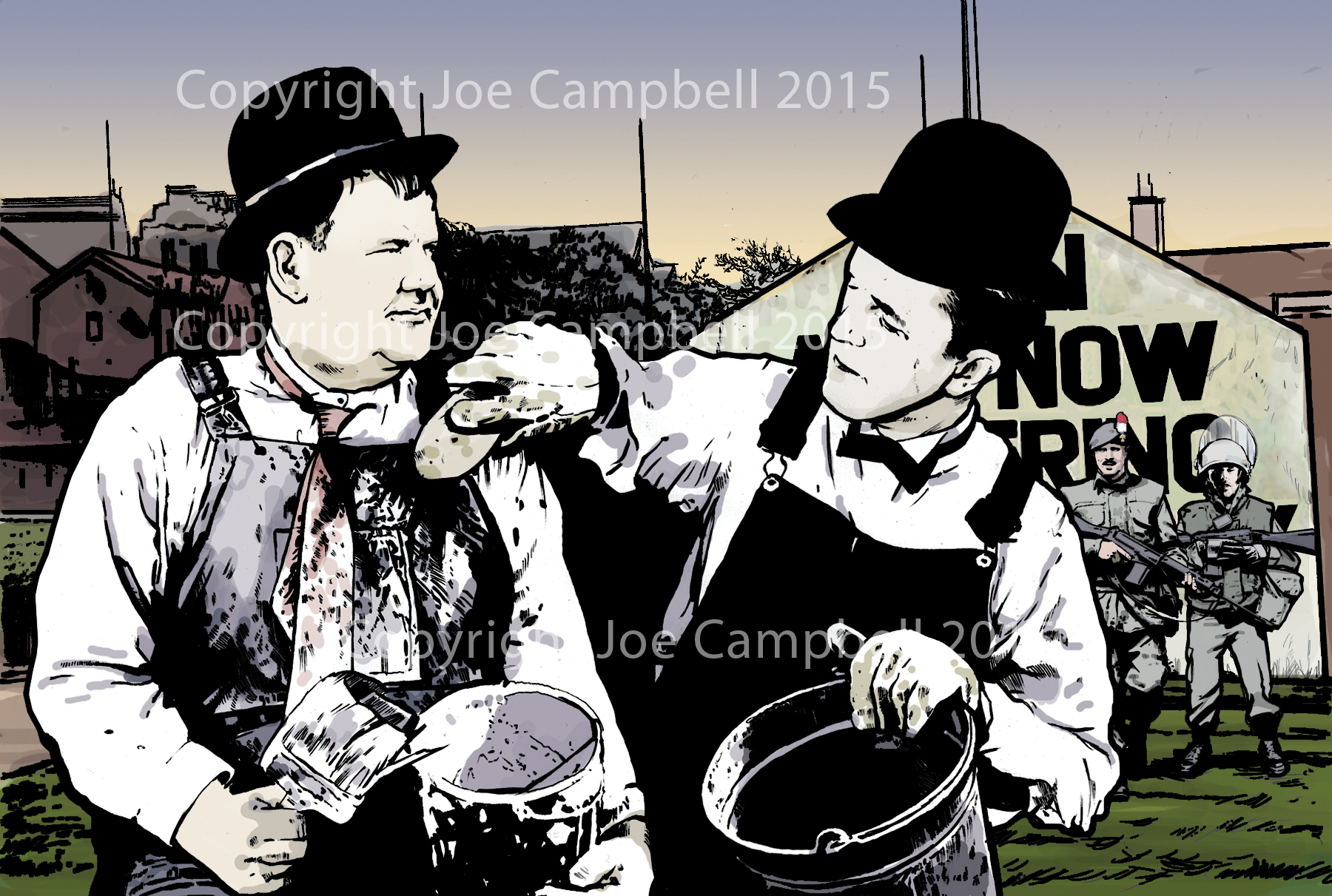
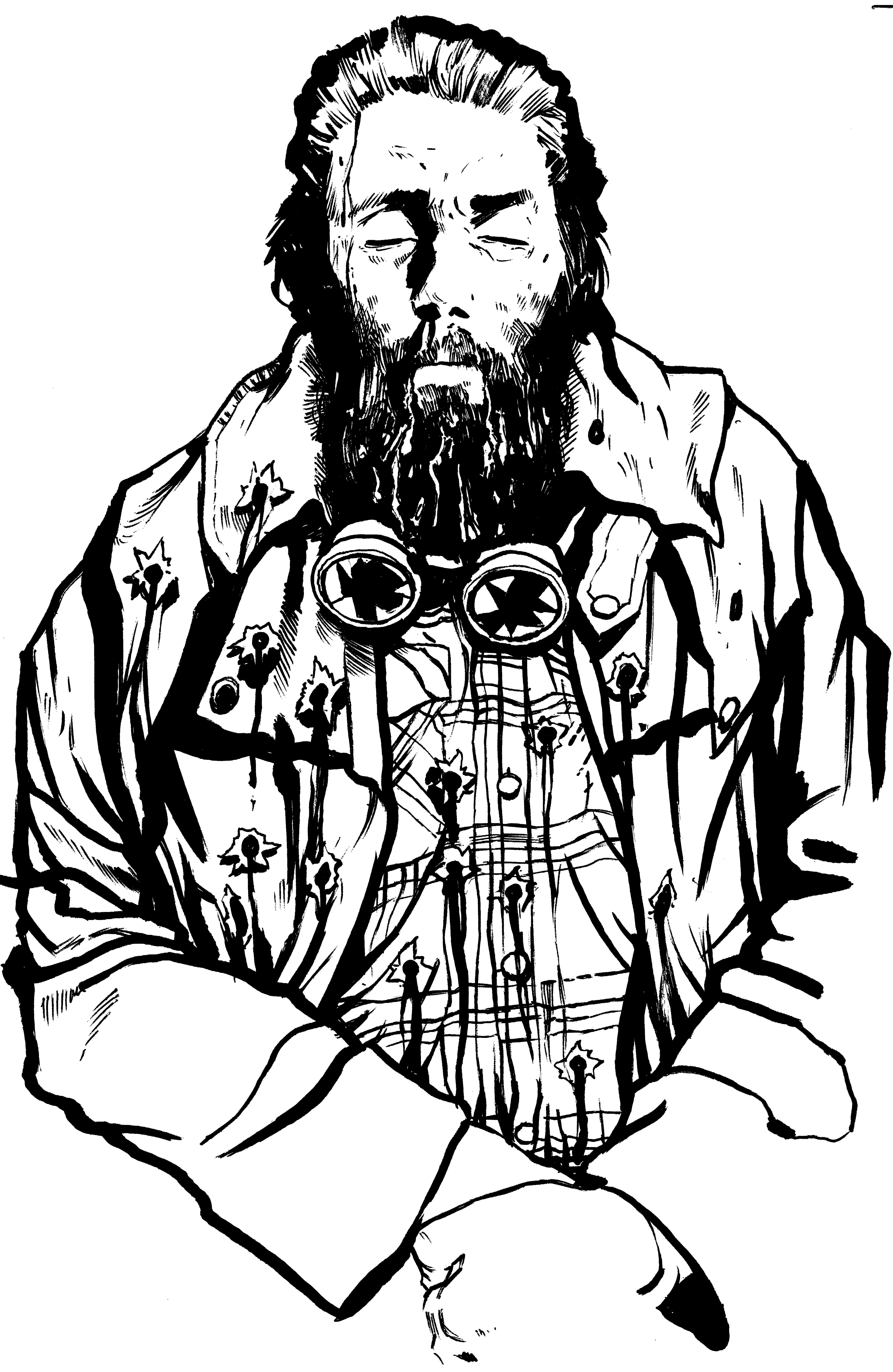
These alternate mementoes/artist’s view of the troubles are currently on sale as A4 prints at Checkpoint Charlie in Waterloo Street in Derry. They represent a cultural, more abstract view of Derry’s recent troubled past. Since so many tourists are drawn here by that very thing, the aim is to give them a more relevant momento of their stay, something unique and relevant to their visit. These images also have poems attached to them. I’m hoping to publish these as part of my second collection of poems sometime soon. I’ve included the poems below as well as the image.  Buzz Aldrin at Free Derry Corner As Armstrong and Aldrin bounced on the moon we battled in the Bogside, a giant leap backwards as the gravitational pull of reality barren as the moon above, dragged us back to Earth I sat, a boy, agog at the black and white flickering miracle on TV sat open-mouthed, clutching my model of Apollo watching grown men cry I bounced round the room with Neil and Buzz witness to history in the heavens while all around me, down on the ground deployments, walls and peace lines rose And now they come like Aldrin and Armstrong the ultimate tourists drawn to those walls posing for photos, smiling at the moon
 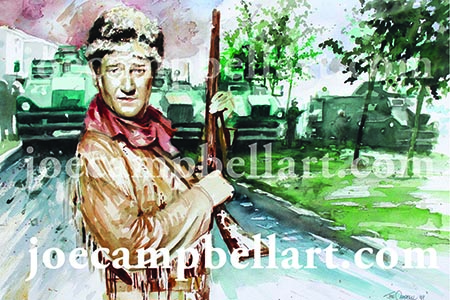 Recreational Rioting Oh for the days of the Derry dances With a hop and a skip And away we go King and country Versus chieftain and tribe Happy as Larry both full to the brim With a cracker skim of a stone And the resulting scatter, laugh and rally Oh for the boys of the King’s Own Lancers With an “Alright mate, up against the wall!” With a hop and a skip And away we go Remember the Alamo Davy and the boys A cracker film on BBC 2 Then onto the streets Out for a throw Here’s to the days of the Derry dances With a hop and a skip And away we go
Author: joecampbellart
Poster Artworks/ Alternate Mementoes by Joe Campbell, Derry Artist
Hi folks, looking for an alternative, creative, artistic Christmas Present for someone close? These posters are signed and are part of a limited edition of 100. They are available at both A4 size and A3 sized posters.
Unframed prices A4: £25 A3: £50
Framed: A4: £50, A3 £100
The prints will be on a heavy satin finish paper.
Contact: joecampbellart@talktalk.net
Just putting the finishing touches to a series of digital images, some old some new. I’m planning an exhibition of these later this year and plan to put out an alternative set of postcards/artworks that on the theme of images generated by memories of the troubles.

The images will be digital pieces, rendered in my comic book style and will feature Free Derry Corner, media icons, cultural juxtapositions designed to make the viewer look and think.
Look out for these hopefully I’ll get them into local tourist spots and The Museum of Free Derry and anywhere else I that will have them. Since so many tourists are drawn here by our troubled past the aim is to give them a more relevant momento of their stay, something unique and relevant to their visit.
https://m.soundcloud.com/the-grin/the-grin
The Grin to Reform!

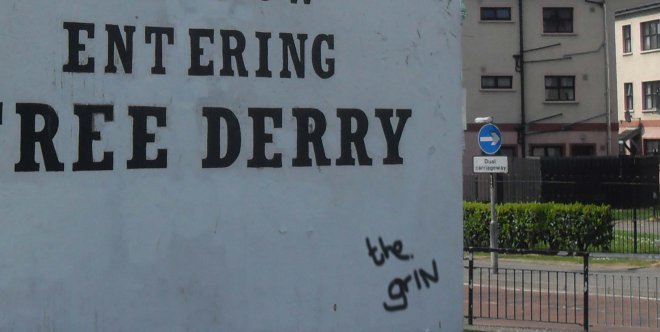
The Grin, a six piece Celtic rock outfit, will shortly be releasing their first single an up-tempo reworking of the old folk standard, Nancy Whiskey and will be back on the road from May 2015
Formally known as Gravediggers Grin the band went off the road due the tragic death of their lead singer Paddy Concannon in February 2009. Formed in 1993, Gravediggers Grin were well known for their dynamic mix of original Thin Lizzy/Horslips/Pogues anthems. Paddy was also a former member of The Canadian based, Mahones now one of the world’s best known celtic rock bands.
The new line-up sees two founder members of the Gravediggers, brothers, Joe Campbell (lead guitar) and Dermot Campbell (bass) team up with derry drum legend, Mickey (Da) Feeny on drums. Also in the line-up is Grin veteran; singer, Dano Brown; guitarist, banjo mandolin player, Seamus Cradden and Virtuoso tin-whistle player; Geralt…
View original post 64 more words
Amelia Earhart in Ireland Anyone?

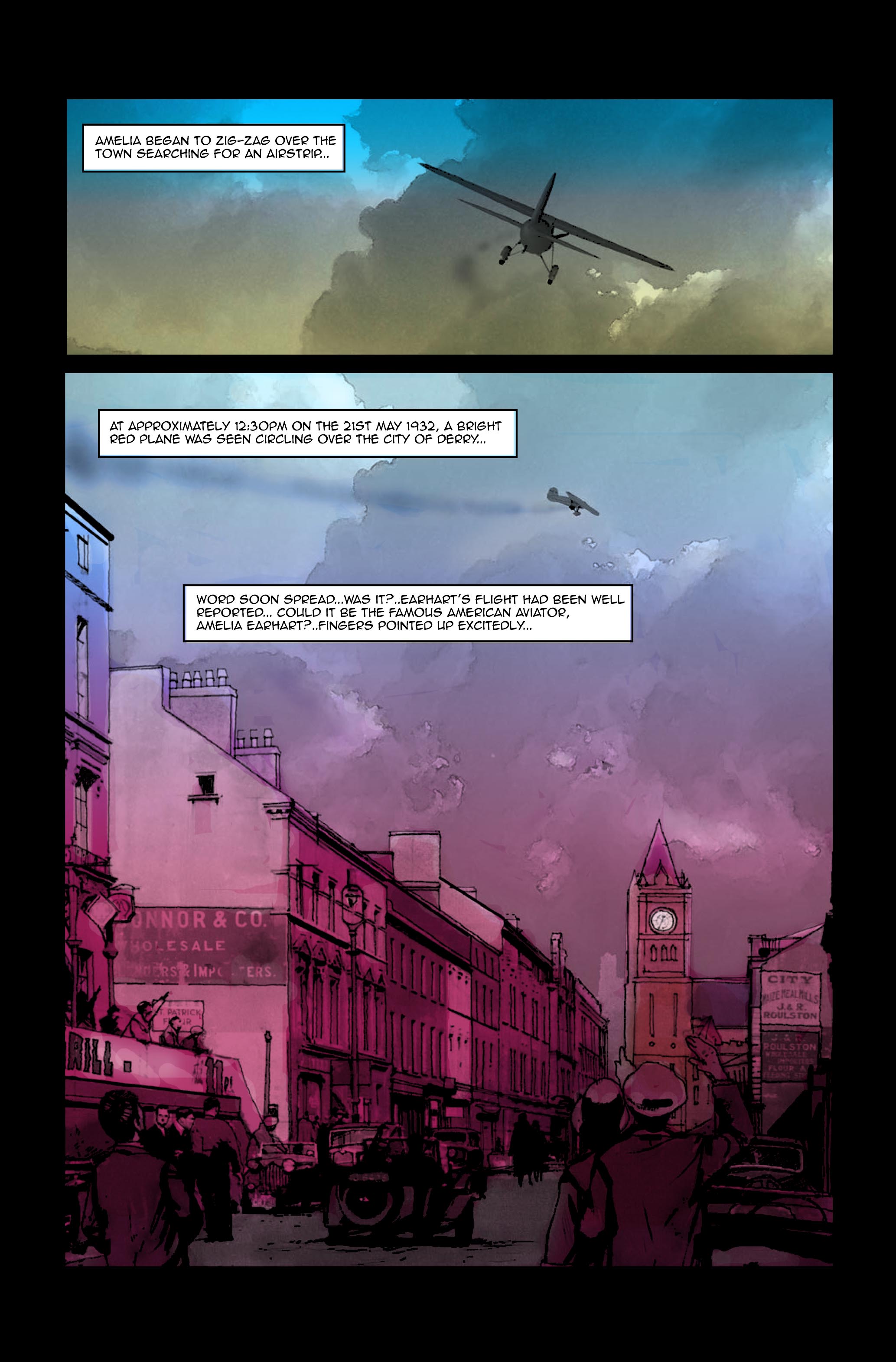
A few extracts from my 48 page graphic novel, Amelia Earhart: First Lady of Aviation. The Second edition was published in 2012 by Uproar Comics. These are previously unseen or unpublished colour extracts. The original artwork was in black and white making the novel so much more affordable to print.
Graphic Novel First Published 2012
Amelia Earhart, First Lady of Aviation, is the first graphic novel from Uproar Comics and is essentially the story of Amelia in Ireland. A new take on the Earhart legend, half graphic novel, half prose, the book tells the story of Amelia’s 24 hour stay in Derry after flying over 2,000 miles across the North Atlantic in just under 15 hours on the night of May 20th 1932. The book was written and drawn by two natives of Derry, author Felicity McCall and comic book artist, Joe Campbell. The book is in two parts. Part one takes the form of a graphic novel with Campbell’s meticulous art recreating Earhart’s near disastrous, solo, transatlantic night flight, her plane (The Lockheed Vega) and Amelia herself, in fine detail. Although Earhart is well served on the American market this is the first outside perspective of the notable aviation legend and the first Irish publication.

Part two, A Day in May is the story of Earhart’s 24 hour stay in Derry, written and illustrated by Joe Campbell. A Day in May is a collection of contemporary press accounts, coupled with eye witness stories (including those of Earhart herself) The book not only describes the immediate aftermath of one of the twentieth century’s most touching acts of endeavour but also, provides an intriguing snapshot of 1930s Ireland placing the modern, feminist celebrity of Earhart (and her red and gold liveried state-of-the-art aircraft) within a quaint, alien landscape where a car was still a novelty.
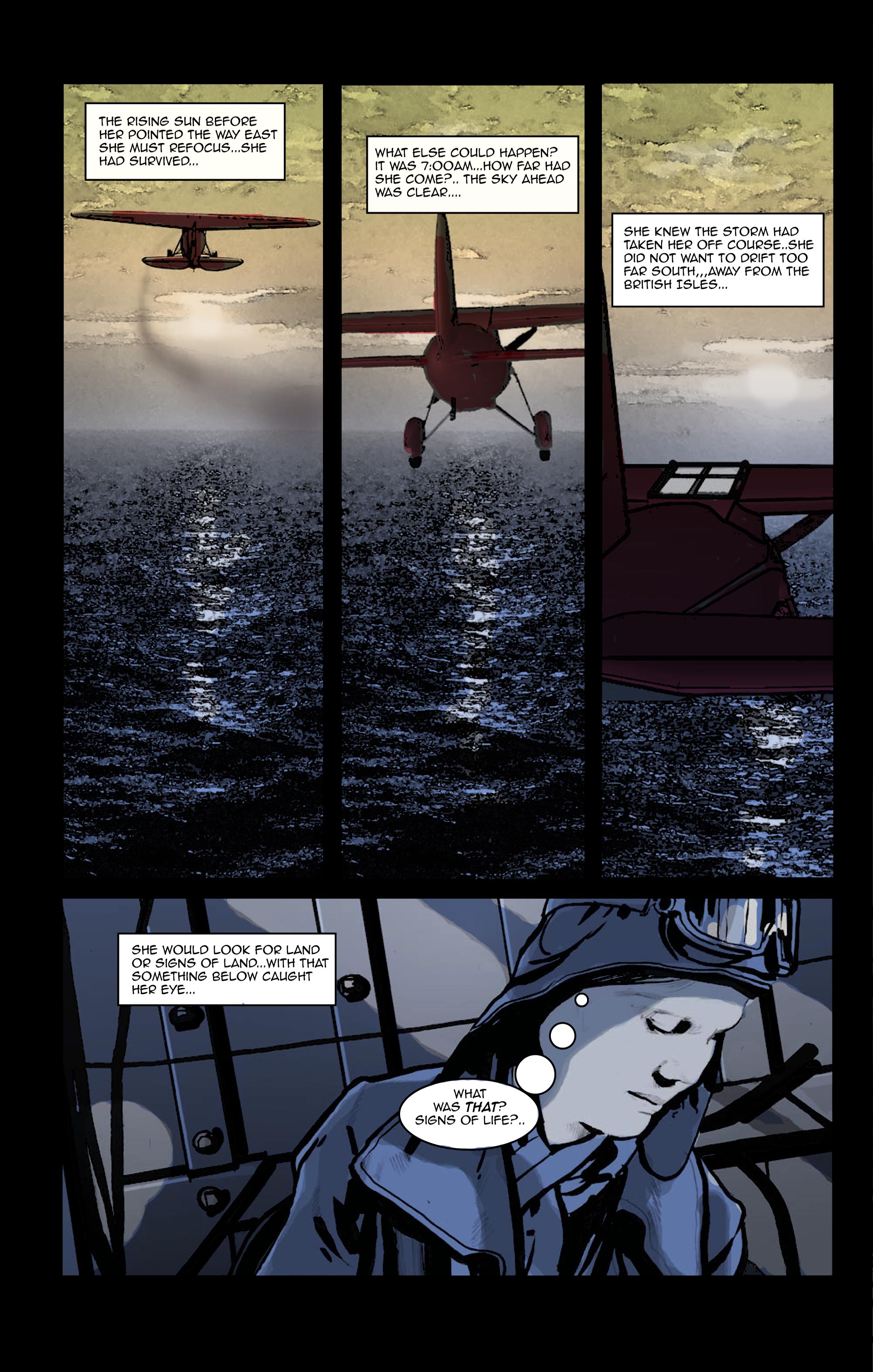
New Full Colour PDF Download
But, I now have a full colour version of the story as a downloadable PDF. If there are any Earhart appreciation groups out there who would like a PDF version of Amelia Earhart’s solo Atlantic crossing or her subsequent day in Derry, Ireland this version would make a great reason for anyone to visit a site or for a school project based on Earhart both at primary and secondary level. Personally, I believe Earhart’s solo Atlantic crossing to be the pinnacle of her achievements in aviation. That flight is also one of the greatest endeavours of the 20th Century and worth accounting. if you’re interested, contact me by Email for further detail.

Review
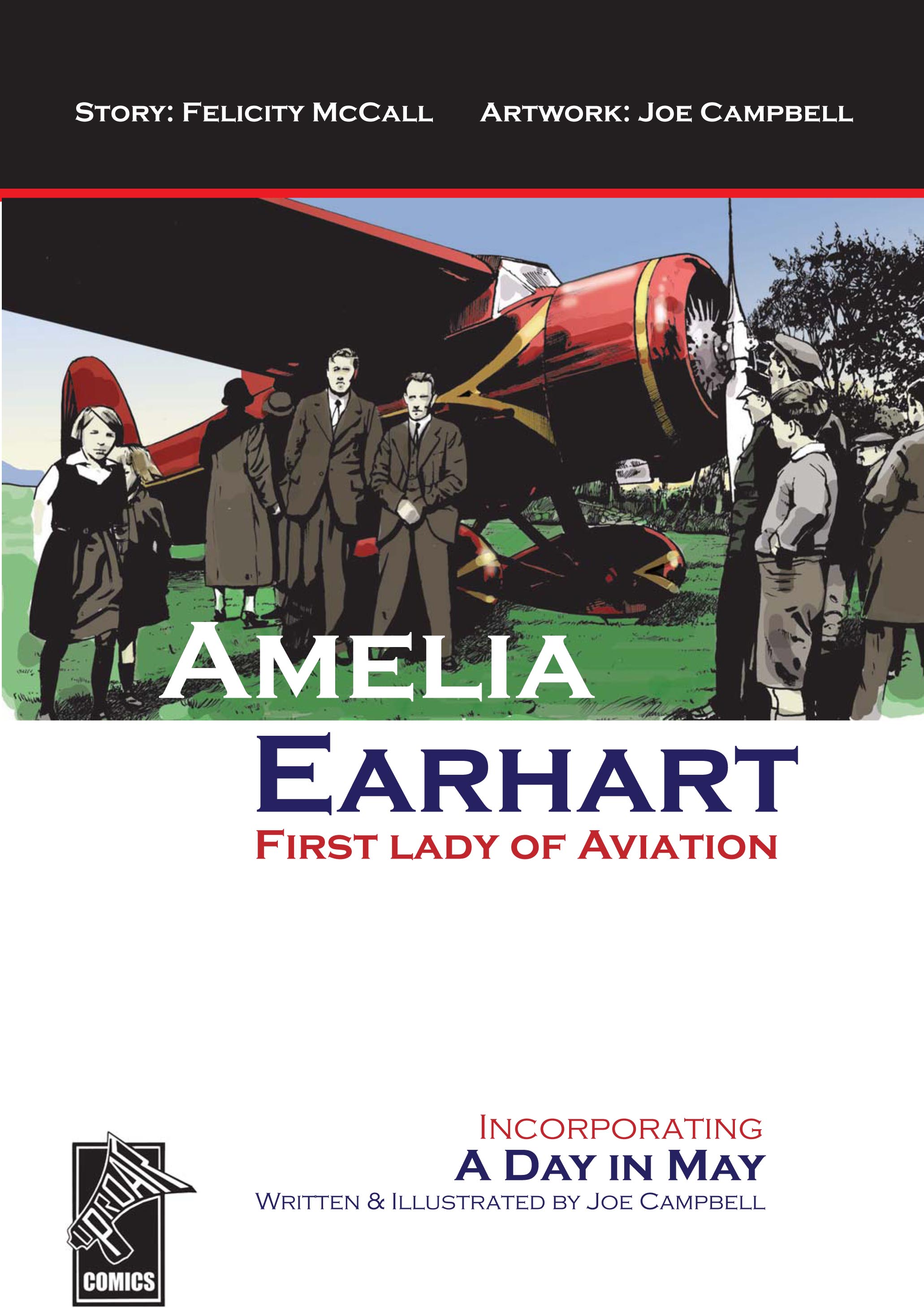
Review of: Amelia Earhart First lady of Aviation
First Published May 2012
Graphic Novel published by Uproar Comics
May and June has been a bit frantic, finishing off artwork for Accent UK, publishing a graphic novel, Amelia Earhart, First lady of Aviation and preparing for the 2D Festival. I owe a debt of thanks to a number of people,Gio, John and Danny at Uproar Publishing, Olly Green and the Earhart Festival (which ran in Derry from May 9th to 21st )and David Campbell and his team 2012 2D Festival. Now that the dust has settled a bit I can view events through that odd blue haze of distance that forms as you get a bit older…all that “the higher up the mountain you struggle the clearer and wider the view over your shoulder.” kinda stuff..thingy..err… stuff.

Odd Choice for a Graphic Novel?
I had a bit of that…Amelia Earhart…odd choice for a graphic novel? Well, maybe but …BUT he said, I think that’s the real strength of the genre, pushing the boundaries a little, doing something a little off the wall, using comic books to educate, inform and entertain, writing from where you come from, what interests you and from what you know may interest others. There again, if Earhart’s life and achievements are not good material for an adventure yarn I don’t know what is. After all we do have a unique perspective on a globally historic figure…and if you want to find out what that unique perspective is, well…it’s all there in the book!
Local Publisher
The other obvious opportunity is the fact that we now have a young, professional, ambitious comic book publisher on our doorstep here in Derry in the form of Uproar Comics. This is a real plus and the fact that Uproar are willing to speculate and try different titles is also something to be celebrated. The Zombie Hi series has at its core a sense of the city’s past. Those stories clearly reference the Siege of Derry. They take a contentious past and place it in a new context using it as a backdrop for a more universal story applying new technology and in so doing, appealing to a wider audience.

Martina Anderson MEP with a copy of Amelia Earhart graphic novel, announcing her appointment to the European Parliament and highlighting the importance of getting our story out to the world. Speech at the Earhart Festival Gala Ball, May 2012
The Earhart Festival/Support for artists
Talking about festivals, apart from the 2D Comic con, Derry also hosts the Earhart Festival in May. The Earhart Festival is a community arts festival… a mixture of arts and community focused events, (what else!) The objective is direct community engagement, ordinary people taking part in the arts and cultural activity. It also engages a lot of local artists like me.
Apart from the launch of the graphic novel, the festival also staged the world premier of One Day in Derry a new stage play commissioned for the festival; The Amelia Earhart Awards for children of achievement; the first ever Amelia Earhart lecture at Thornhill College as well as music and dance workshops for teenage kids. The Festival is supported by Derry City Council and this year was also supported significantly by City of Culture Company.
Often unsung, Community arts provide direct support for artists, musicians, writers etc without soul destroying and time sapping bureaucracy. My direct experience has been that funding involves “gate keepers” many of whom are not artists at all but people or committees with bureaucratic backgrounds (civil service, administration, etc.) tasked with accounting for funds and implementing plans and strategies. Getting round that sophisticated begging process is a boon and Earhart made that possible for me. (That said I just got another SIAP award from the Arts Council – thank God!)
My graphic novel was made possible by direct financial support from the Earhart Festival. This is a significant thing. Print and launch costs were given to assist with the production of the novel because the reasoning behind the project was recognised as worthy. Telling the story of a significant global heroine who just happened to grace a green field in the north of Derry in 1932, dropping in briefly for tea on her way to immortality, has made us part of a wider story. As we emerge blinking out of a long conflict (like an audience from a dark cinema that screened a 35 year long war movie with no intermission) I think we need alternate viewing…to redefine ourselves, look further than our next door neighbour. Earhart is a world story. We need to frame ourselves thus.This was part of the thinking behind telling the story of a historic event
(Earhart’s solo Atlantic crossing in 1932 and subsequent landing at Culmore in Derry) in the form of a graphic novel… It’s a very accessible medium. You never know, it may even be read by teenagers! The Earhart connection has the potential to really bring visitors to the city. It’s ultimately about jobs and opportunity. The more people know the story the better. And why not capitalise? Any practicing artist in the city will tell you what the inside of the dole office looks like! Maybe I’m wrong but we should look for these connections, in the United States (the biggest economy in the Western world) Earhart is a national figure as big as any president and as big as any Hollywood star, past or present and we have a unique perspective of her. My own personal opinion is that people have to buy into an idea and to do that you’ve got to know what you’re buying in to
New Opportunities
But thankfully, given our mad recent past, things are beginning to change. The 2D festival in particular has helped change the immediate local landscape and arguably, the Irish arts landscape and its place in the comic world. Every time I see David Campbell I tell him “Dave, are you aware of the significance of what you are doing with the 2D?” Dave usually smiles modestly. But if he would allow me, I can see it. I was honoured to be one of the guests at the 2D festival. I say honoured because I’m aware of the level of some of those other artists/writers/creators around me at the 2D. What the 2D has managed to do is to bring the outside world into our own space. It has provided us with comparative measures as to what is “good” and to discover whether or not we measure up to the very best in the world. It also accommodates not only those at the top of the tree but also an indigenous, young emergent small press from all over Ireland. It was nice to meet Mike Lynch and Andy Luke who I’ve had contact with during the year.
As you sit in the Verbal Arts there are experienced professionals from everywhere reflecting the fact that geographic location means nothing anymore in terms of the business. All the artists are united by a common respect for the business of making comic books whether that’s by working for the finest publishing houses in the world or by making their own comics on a PC or a photocopier we share the same space – the genre of comic books.

The author, Felicity McCall and artist, Joe Campbell, discussing the graphic novel with Shona McCarthy, CEO of City of Culture Company, with John Campbell, Author’s son and artist in background, May 2012.
Why Earhart?
All that said things are changing (as they always will). The arts, cultural tourism not only has significance for the city (as evidenced by City of Culture, the One Plan and the noticeable presence of tourists here) but also for Northern Ireland as a whole and that has been the experience in Belfast (Titanic Quarter, Game of Thrones). The difference between what’s happening now and the past is that all these things require the city (and the North) to be outward looking. To me Earhart is worth the effort because although she may have a local connection she is also a global figure.
Until next time, speak soon…
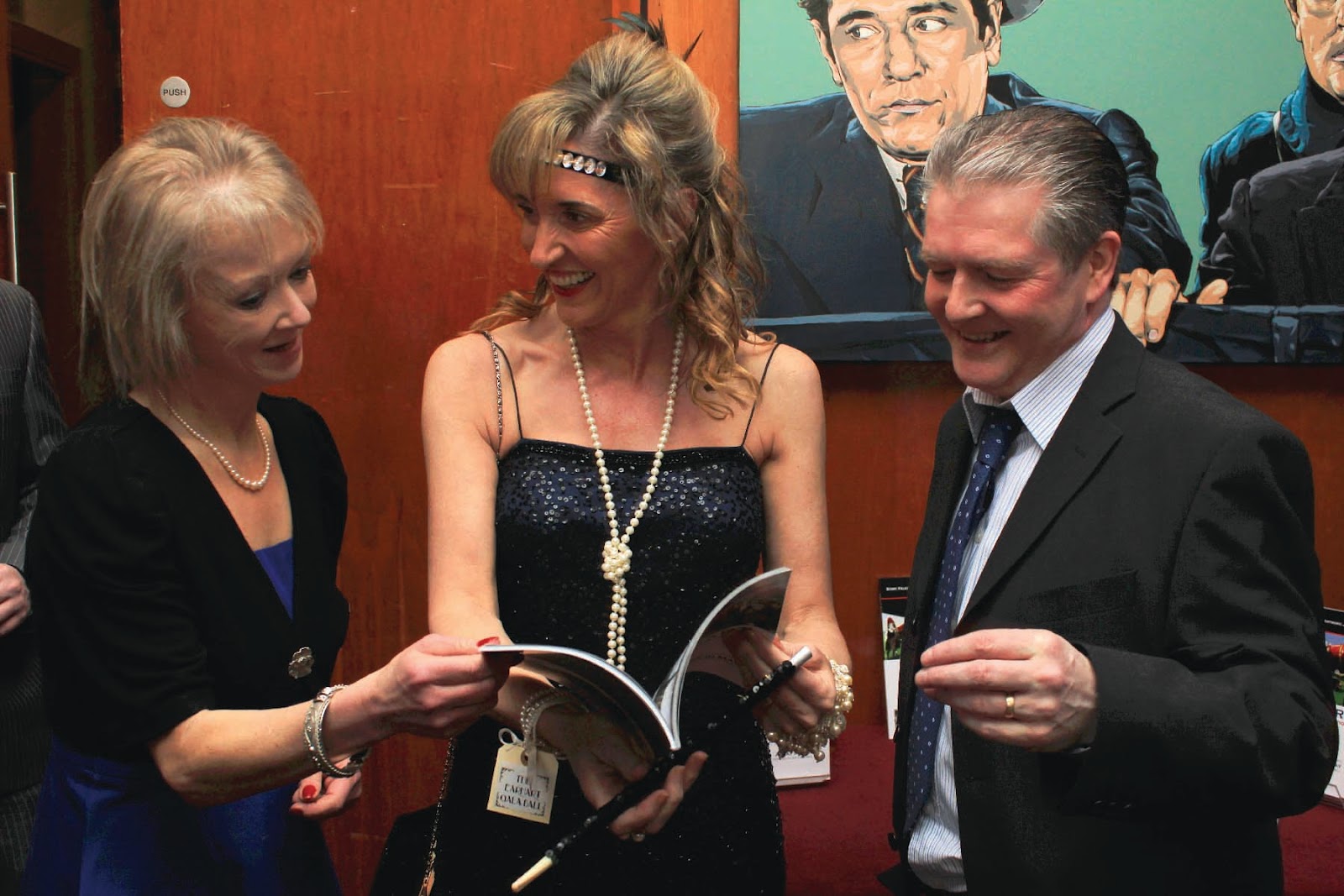
Felicity McCall, (writer Amelia Earhart) Martina Anderson MEP and Joe Campbell (artist, Amelia Earhart) at the Earhart Gala Ball, May 2012.
WesterNoir: Tales of WesterNoir, Accent UK, More Extracts and Artwork




Amelia Earhart in Ireland: Solo Atlantic Crossing, May 21st 1932
One Day in May
Extracts from the Novel by Joe Campbell
“Derry attained fame on Saturday as the landing place of the first woman to cross the Atlantic alone by air. Miss Amelia Earhart, the American flier who has achieved the great distinction and at the same time established three records, landed in a field near the Ballyarnett Racecourse on Saturday afternoon.”
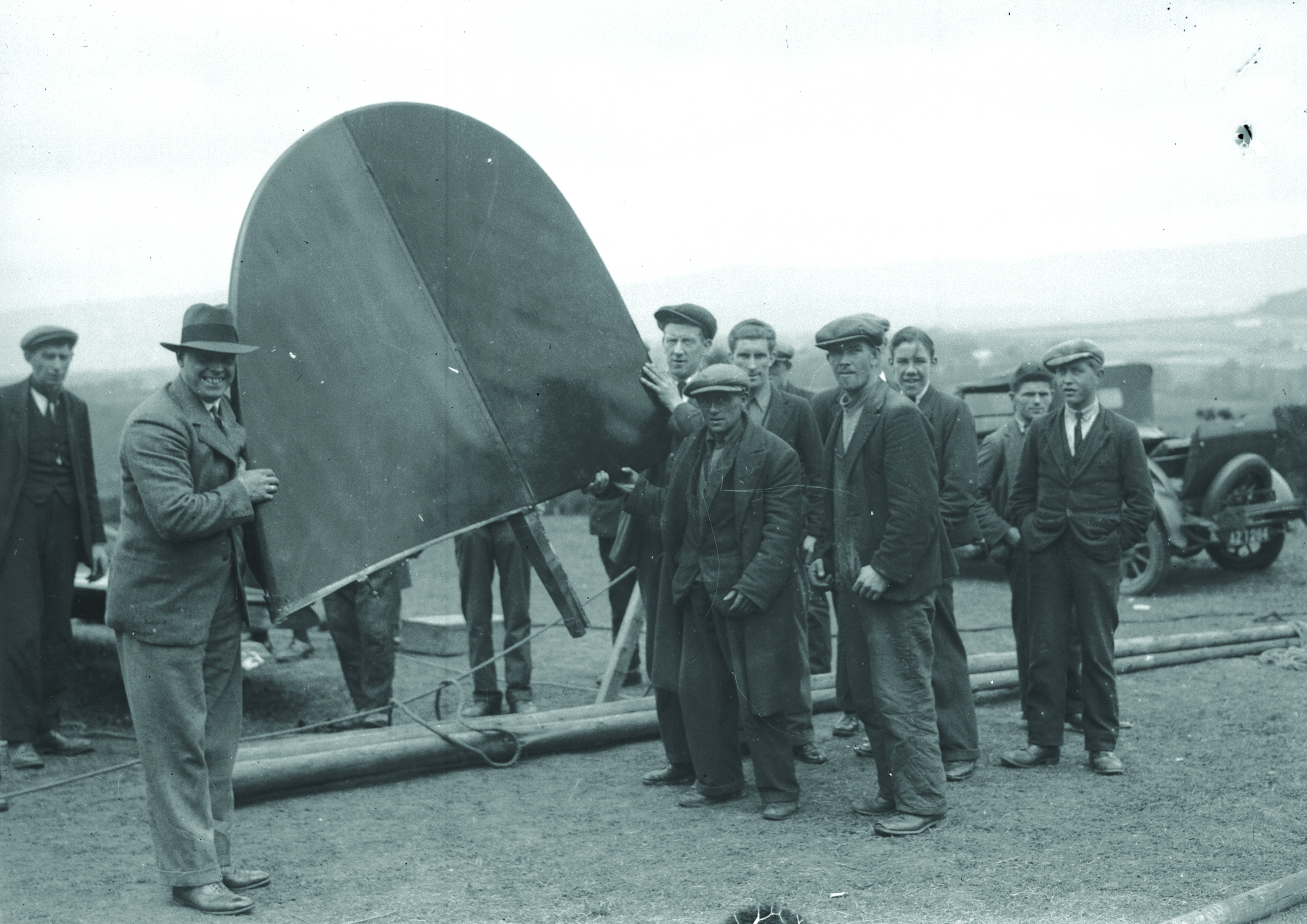
So read the article in the Monday Morning edition of the Derry Journal of May 23rd, 1932. The article was written two days after one of the most significant events of the twentieth century, the first solo flight across the Atlantic by a woman covering 2026 miles in 14 hours 56 minutes. by “Lady Lindy” known to her parents as, Amelia Earhart.
The Journal piece summed up the highlights of the story with no less than eight sub headings: “First woman to fly Atlantic Lands at Derry” “A Wonderful Performance” “Safe Descent Near Cottage at Springfield” “Rail track As Guide” “Three Records Established” “Gasoline Leakage Forces landing” “Great Crowds Visit Scene” Thirty-two words to sum up what was in reality a minor miracle, a miracle that both the aircraft and its soft spoken, Kansas born pilot had made it at all. But, made it she had.
Earhart’s approach to the city was witnessed by many. A Derry Journal account written at the time of the 70th anniversary takes up the story:
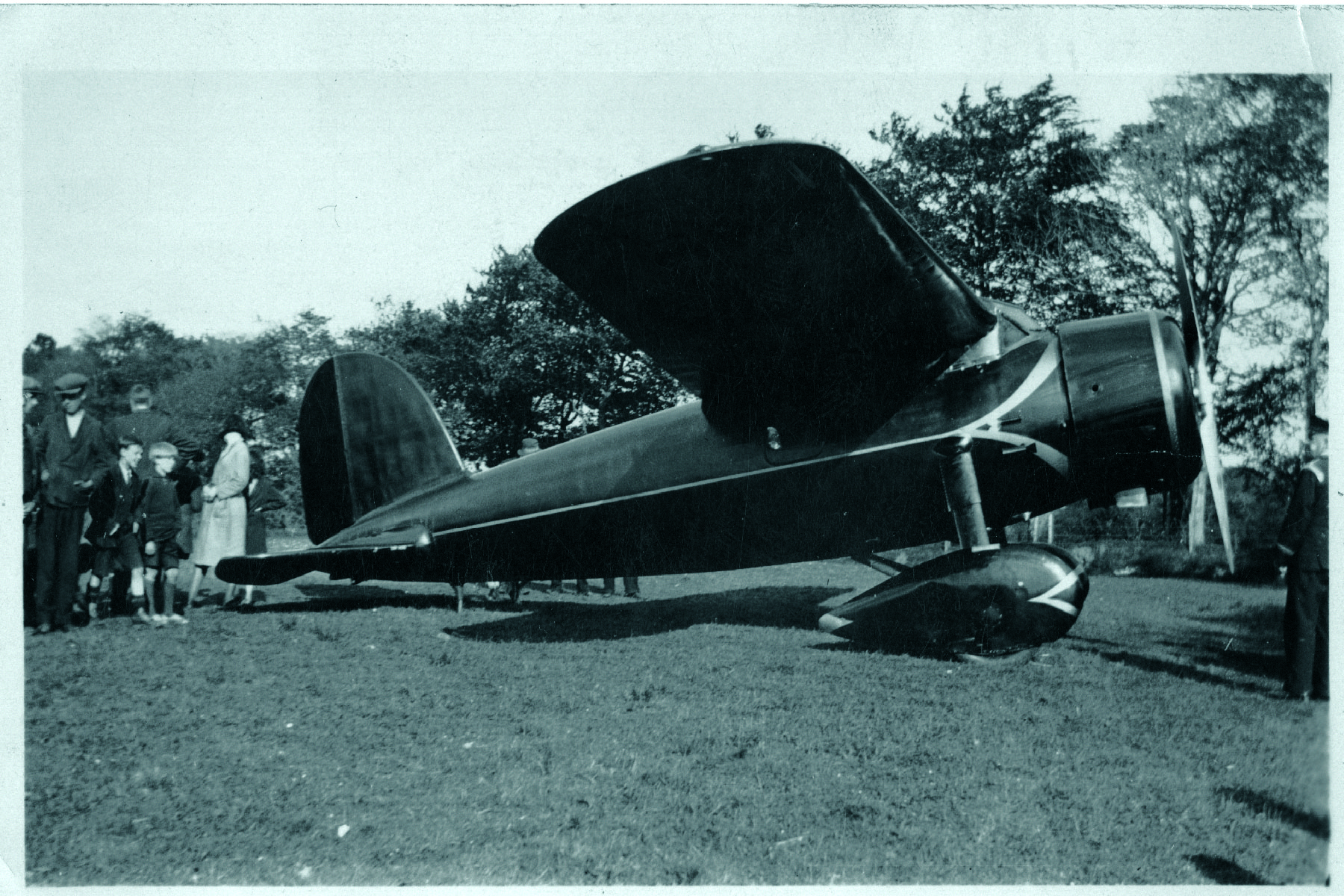
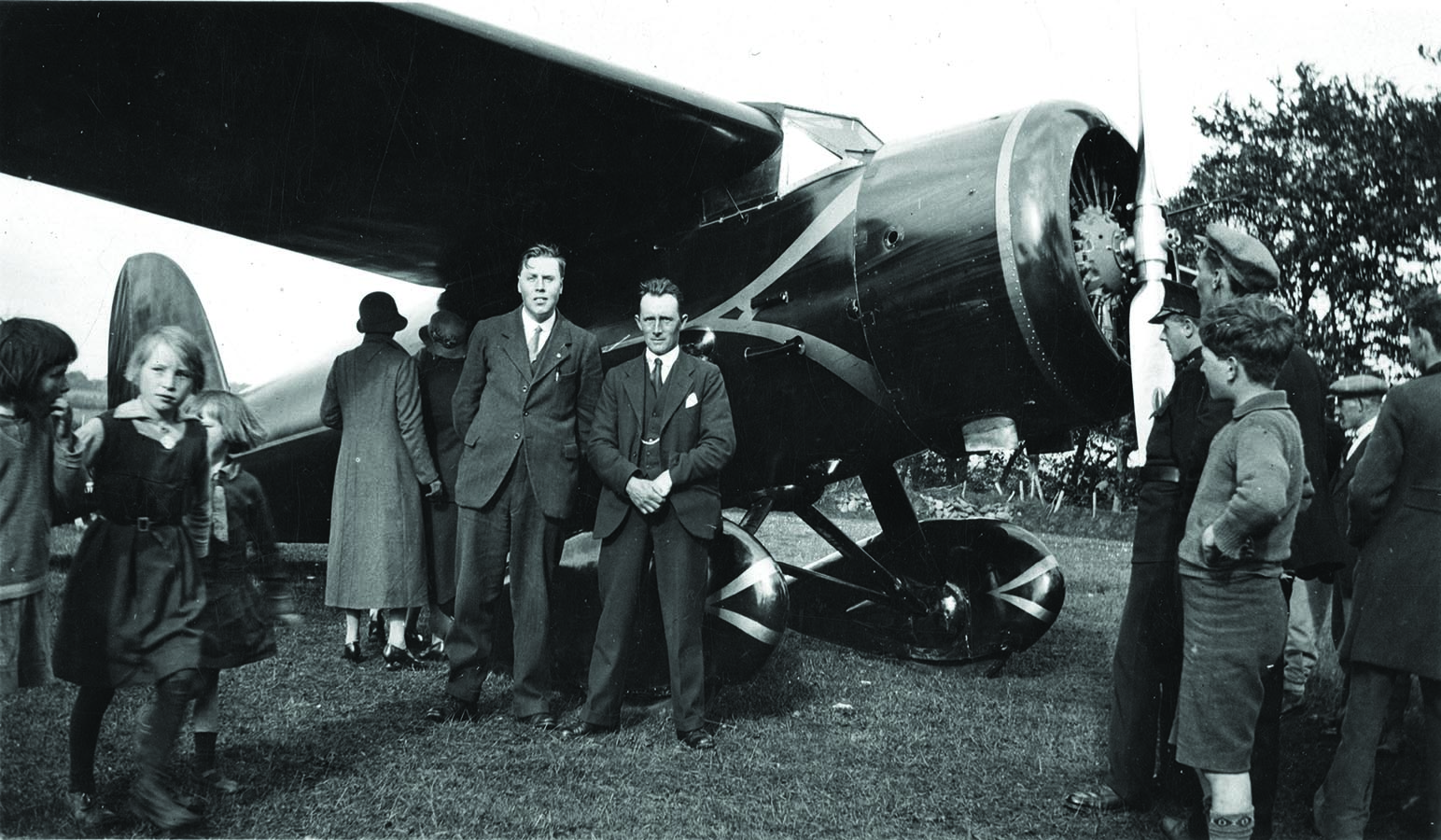
May 21, 1932, Amelia Earhart created aviation history as the first woman to fly solo across the Atlantic. Landing just outside Derry in “Cornshell” where the Amelia Earhart Centre now stands. Local men, James McGeady and Dan McCallion were mending fences in fields close to their home at Shantallow. They became aware of a small red plane, an uncommon sight in those days, coming from the Moville direction. The plane began to circle. Suddenly the plane descended, so low that it clipped the hedgerow. The pilot regained control, circled McGeady’s house three times and landed uphill in the field not ten yards from where James and Dan were fencing, coming to a halt in front of two cottages owned by the McCallion and McLaughlin families.
“James ran to the spot and approached the plane. For a while nothing happened, and then all of a sudden the pilot emerged unscathed. To his great surprise it was a woman! After asking McGeady to extinguish his cigarette as a precaution against a fuselage leak. McGeady, after recovering from his initial shock then asked, “Have ye come far?” To which Earhart made the famous reply, “Only from America” Shortly after, she made her way to the nearby cottage owned by Hughie McLaughlin. Anxious to let the world know of her arrival, local farmer, Robert Gallagher, whisked her off to the Post Office in Derry where she phoned the Press Association”
Earhart’s own accounts although modest, still paint a picture of lucky escape and near disaster. “I took off from the famous Harbour Grace runway (Newfoundland) at dusk, about 7:30pm I believe. I flew for a couple of hours while sunset lasted and then 2 more hours as the moon came up over a bank of clouds. I had fair weather for about 4 hours. Then, I ran into a storm which was one of the most severe I have ever been in.
I milled around in the storm for probably an hour and with difficulty, kept my course. I had been troubled with my exhaust manifold burning through all night. A weld broke shortly after I left Harbour Grace and I could see the damage increasing as the night wore on. I found specific thunderstorms probably off the coast of Ireland. I believe I saw land first around the middle of Ireland…I decided to come down anyway in the best available pasture. I got down without any trouble and taxied to the front door of a surprised farmer’s cottage.”
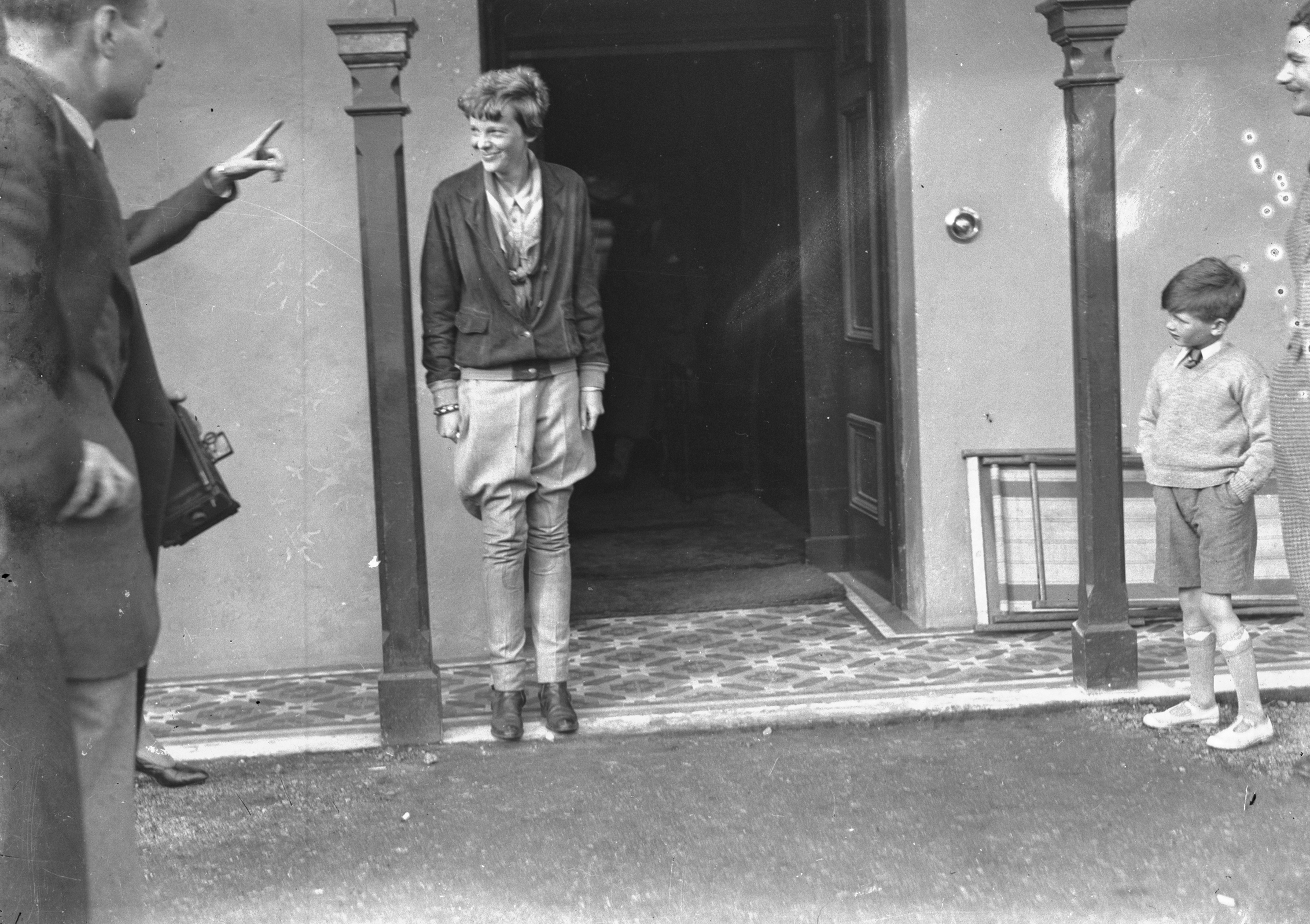
One of the most detailed and eloquent eye-witness accounts of the landing was given to the BBC in 1935 by Mrs Isobel Gallagher, Robert’s wife and mother of Bert. This account is so detailed it’s worth reprinting in full:
“It was one of those lovely hot afternoons that you sometimes get in May and being a Saturday and the children not at school; we were sitting in the garden. Our place is at Culmore about 2 miles from Derry. We’ve a number of big fields around the house. Well, about 2-o-clock we heard an aeroplane and soon afterwards we saw a great red monoplane over the house, flying very low. It circled round a couple of times and then made for the big field at the back of the house and landed.
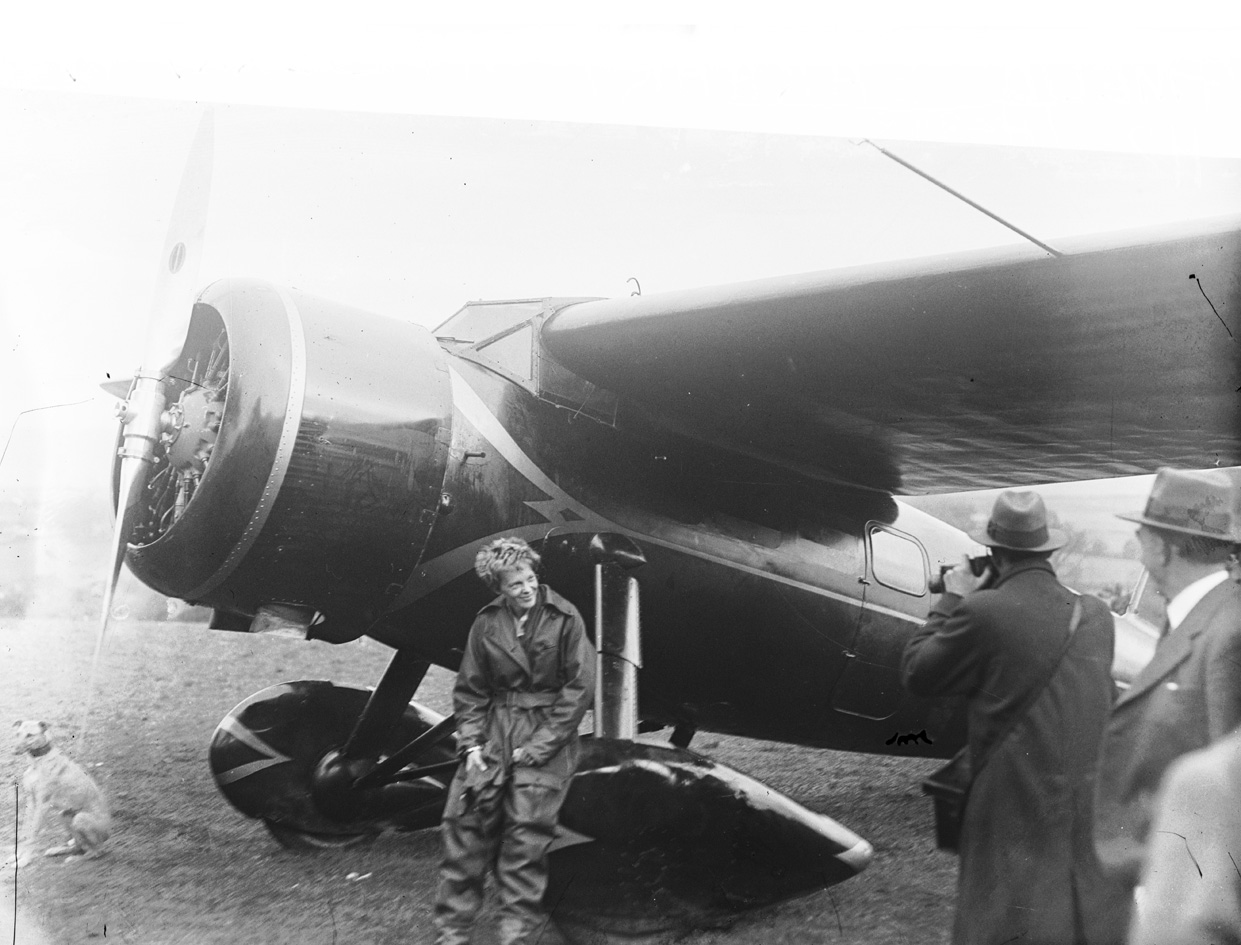
“The afternoon was hot and I felt lazy, so, I’m afraid I didn’t pay much attention to it. I was too comfortable where I was. The children were very excited however. So they and my husband went over to the field as did some of the farmhands and workers from other houses round about. The first farmhand that went to the aeroplane saw that there was a woman in it and asked her where she’d come from? She said, “America”. I didn’t know about this until afterwards when my curiosity got the better of me. After a minute or two I went up to the plane as well. Standing beside it was a tousle-headed girl in trousers and a leather coat. She didn’t seem at all excited. The first thing she asked me for, after we had bidden her welcome, was a telephone. She would not wait to talk but went off with my husband as fast as she could over the fields to the nearest house on the land. She explained as she went that the only thing she wanted was to get through to her husband (George Putnam) and tell him she’d arrived safely.
“There was no use in waiting, so I went back to the house. I suspected she’d be very hungry. So, I got a meal ready for her. She said she hadn’t had anything but tomato juice since she’d left America. We asked her to stay with us until she was ready to go on again and she said she would, so long as we didn’t mind her clothes. She had nothing but what she stood up in. in fact, she had literally no luggage of any kind with her whatever and no money either. But my husband was able to fix that. I lent her some nice things and life was just settling down again when the trouble really started.
“The news had got about that an American aeroplane had landed at our field and we were besieged by visitors, onlookers and of course, reporters. Poor Miss Earhart, she seemed to spend her whole time being interviewed and during the next day our place became a sort of a miniature aerodrome. There were no less than five press aeroplanes parked in one field at the same time. I spent most of the time making tea for all the people who came to call. Well, our guest left us on the Sunday night to go to England…We all liked her very much. There was no nonsense about her and we thoroughly enjoyed having our very unexpected guest. I can still hear her nice matter-of-fact voice saying about her flight as if it had been a rather long motor drive on a cold day…”
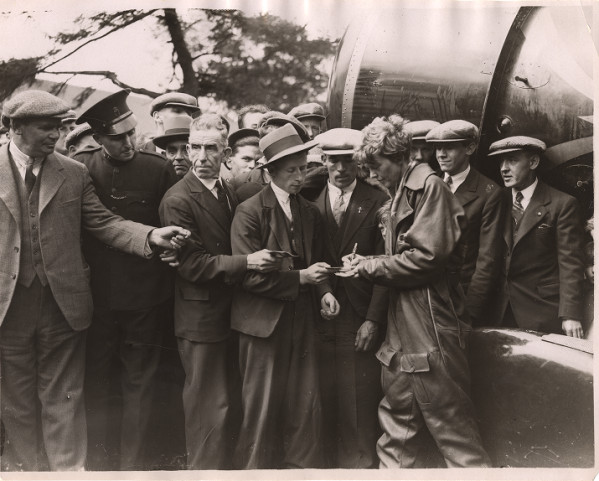
The Gallaghers played host to Amelia all that Saturday and through to the next day, Sunday. As stated in the Mrs Gallagher interview, the moment she had landed, Amelia was anxious to find a telephone to let her husband, the newspaper magnate, George Putnam (who Amelia had married a year earlier) know that she was safe and that she had succeeded in her endeavour. As Mary S. Lovell records in her biography, Amelia’s arrival had already been reported to the local police who in turn informed the Londonderry Sentinel, a local paper.
Teleprinters across the world began to spread the news of Earhart’s success. The New York based newspaper, the Sunday Mail immediately phoned George Putnam passing on the news of Amelia’s achievement. The cable read:
“Landed in pasture…Londonderry, Ireland…5 miles from Londonderry…plane OK…8:35am Ireland.” Putnam’s relief was obvious. He immediately asked that she be located so he could contact her personally.
Meanwhile back in Derry, Amelia was anxious to make the call. Immediately after the landing she had been invited to the Gallagher home where refreshments had already been prepared and where, according to the Derry Journal, she “cheerfully swallowed two cups of Tea and asked to use the Gallagher’s telephone. As it turned out the Gallagher’s phone lines were not up to the task. Amelia then asked where she could find a post office. Robert Gallagher immediately offered to motor her to the main post office which was located, about three miles away in the centre of the city. Cecil King, a journalist, was also present and he too agreed to accompany them to the post office.
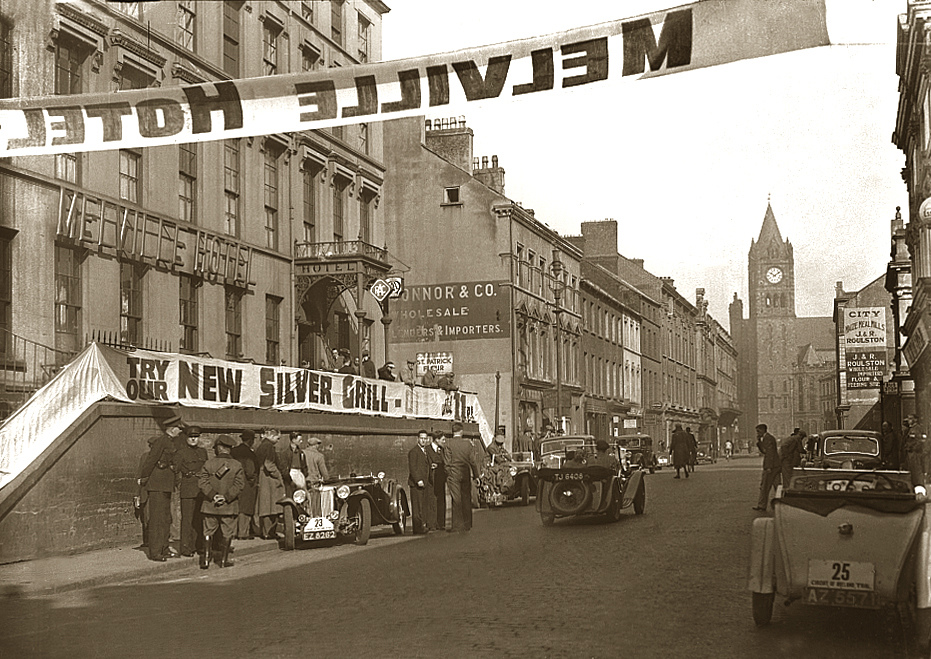
King notes that although she an exclusive contract with the Associated Press of America on arrival at the post office ( still located in Guildhall Street beside the former Northern-Counties Hotel) Amelia booked a transatlantic call to her husband in New York and sent cables before telephoning a London number to give the story of her flight. The operator put her through to the Associated Press in London where she gave a first-hand account of her flight to the awaiting press. While she waited other calls began to pour in from across the world.
Suddenly a voice came over the line, “New York calling.” “From my husband” she exclaimed delightedly and grasped the receiver. Everyone left the room while Amelia spoke to her husband. Hello. “This is Amelia speaking; I’ve done it, although I had to land here in the pastures outside Derry.”
She was able to tell him a little about her flight: she had chosen for the last hours to fly low over the ocean, she said, because “I’d rather drown than burn.” The call lasted fifteen minutes before those outside heard a bright “cheerio”.
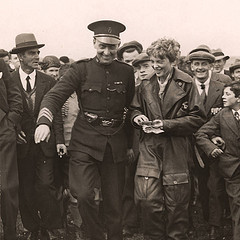
In fact, the wires in the post office had not ceased buzzing since the dramatic landing at Gallagher’s Field. Hundreds of messages flooded in to the beleaguered post office from all over the world including one from President Hoover in the following terms:
“I voice the pride of the nation in congratulating you most heartily upon achieving the splendid pioneer solo flight for a woman across the Atlantic Ocean. You have demonstrated not only your own dauntless courage, but also the capability of women to match the skill of men in carrying through the most difficult feats of high adventure.”
Another message arrived from the governor of Massachusetts:
“Massachusetts is proud of you.” Viscount Craigavon called to offer the hospitality of Stormont Castle. Lord Londonderry, the Air Minister offered his congratulations and the American women of London offered to accommodate her the next day.
Mrs. Victor Bruce, a famous airwoman of the time wired to say that a reception had been arranged for her in London. The Pratt Whitney aircraft company, the manufacturers of her plane, also called to congratulate. Amy Johnson and her husband,
Morrison offered to fly her from Derry to Glasgow. But, Amelia had already arranged to fly on to London the next day with the Paramount Sound Company.
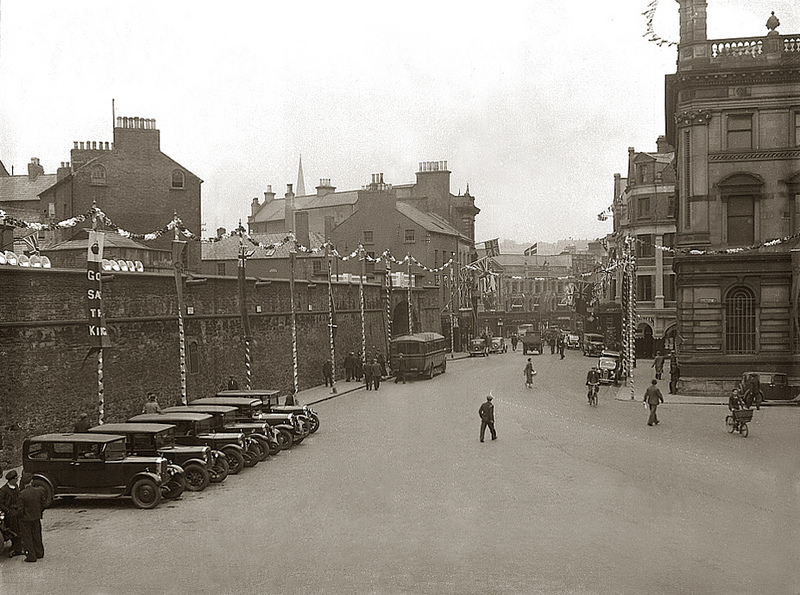
Meantime, outside the post office news had spread that Amelia was inside. Hundreds thronged the street outside. Many had taken up positions on the old city walls, which overlooked the street, to get a glimpse of the famous airwoman from America who had dropped unrepentantly into their midst. Cheer after cheer rang out. Anxious not to leave her plane for too long, Amelia she struggled to make her way back to Robert Gallagher’s car. Overwhelmed by the numbers outside the post office she took refuge inside the Northern Counties Hotel next door. On the way she was greeted by Mr. John McVeigh, president of the local Chamber of Commerce:
“Well done, Miss Earhart. Your country and the whole world are proud of you.”
Other dignitaries added their congratulations as the crowd roared out their acclamations. Earhart’s reaction to all this attention was typical. Reporters noted that she faced the adulation in a shy way being unassuming throughout. As the Journal put it at the time:
“It was a memorable scene, with the slender unassuming figure of the fearless flyer almost shyly facing a torrent of applause.”
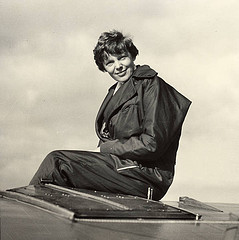
After returning to the Gallagher’s house, Amelia retired for the night at eleven. After just seven hours sleep she rose at 6:00am on Sunday morning and was instantly greeted by hundreds more sightseers and media. The field at Springfield had by now become a temporary airfield with no less than five aeroplanes parked in the field behind Gallagher’s house. Amelia had planned to fly the Vega on to Croydon. But, after a mechanics report from Pratt Whitney she decided against further flight for the Vega and opted to have the plane dismantled and shipped back to the States.
At 9:00am a plane from the National Flying Services by Paramount Newsmen, (Movietone in England) who had exclusive rights for any news reel film arrived to take Amelia on to London.
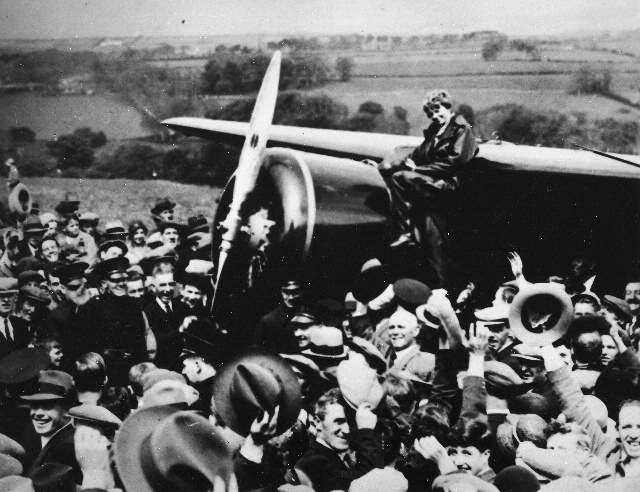
Breakfast was followed by photo calls and press interviews. She posed on the plane in front of sightseers and onlookers. photos taken at the time show backdrops of rousing cheers and smiling crowds. Amelia had donned her leather flying suit for the cameras and newsreels.
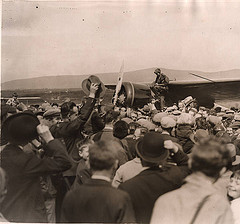
One witness was the Reverend Francis Coyle who was in his teens at the time. he recalls:
“ There was great excitement and a real sense of expectation among the crowds. one has to remember that, in the 1930s, a car was a rare sight never mind an aircraft.
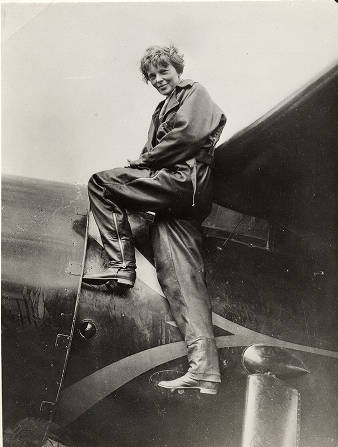
One pressman who prospered from his day with Amelia was Cecil King. King had accompanied her back to the Gallagher house. Pressmen had arrived from London, Belfast, Dublin and Cork. As the night wore on, Amelia tired of repeating her story. She told them she had said all she had to say about her journey to King and that they were welcome to ask Cecil for the story. As he put it himself:
“ I didn’t bargain for all the monetary enticements I received to give them the story, but I was handsomely remunerated.”
King had also been asked by Amelia to witness the removal of the plane’s barograph, the instrument that measured atmospheric pressure on flights. He was doubly honoured to take charge of the barograph to have it returned to the aeronautical headquarters in New York as proof of the flight’s duration.He had also found a copy of a Newfoundland paper, the New Brunswick Telegraph Journal of the previous day’s date, May 20th. The paper contained an account of the lead-up to the historic flight. King immediately contacted the paper and sold them the story from the Derry end. they splashed the story in their next edition.
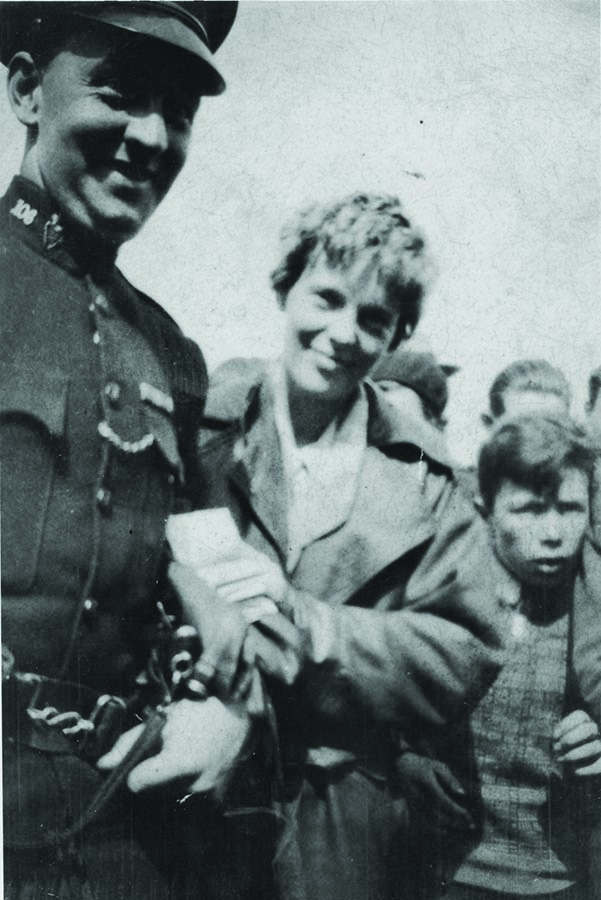
In the early afternoon of Sunday, May 22nd, 1932, Amelia took her leave of the Gallagher family and departed for London in a Desoutter aeroplane which weighed less than the entire fuel load of the Vega. She reached London in a few hours. She made a stop at Blackpool on the way where she changed planes proceeding on to Hanworth Aerodrome landing at ten past six in the evening. She arrived at Hanworth to a downpour of rain with thunder and lightening. The American ambassador, Mr. Mellon was there to greet her.
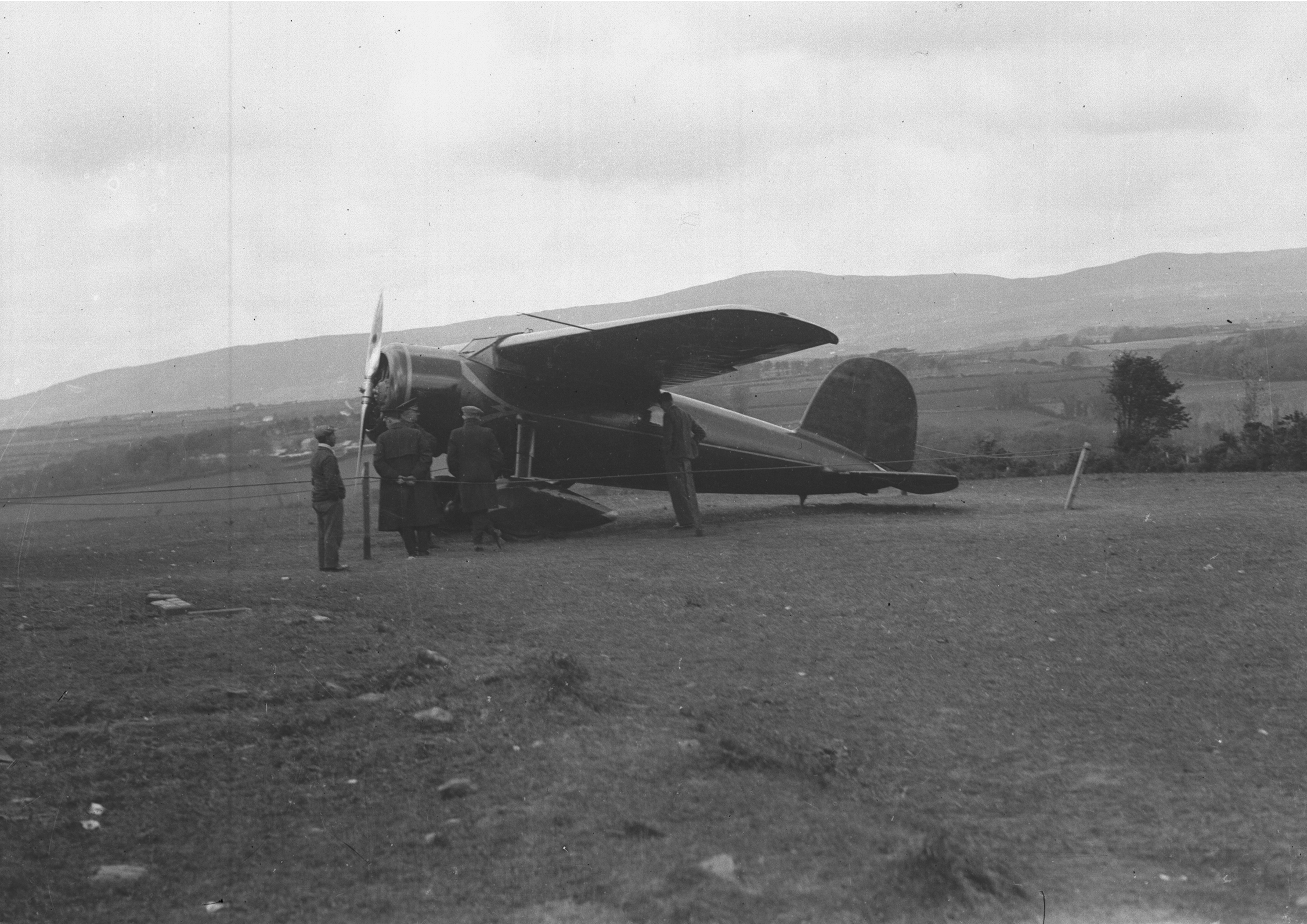
By flying solo, non-stop across the Atlantic on the night of May 20th / 21st 1932, Amelia Earhart had made aviation history.Not only had she become the first woman to cross the Atlantic alone by air she established two other records: the longest non-stop flight by a woman, 2026 miles and the most rapid Atlantic crossing; 14 hours and 56 minutes. in France she received the Cross of the legion of Honour. She also received honours from Italy and Belgium. Upon her return to the United States Amelia was honoured as no other woman had been. the National Geographic Society awarded her a gold medal at the White House, for contributions to aviation and science. In front of a joint meeting of the House of Representatives and the Senate she became the first woman in history to be awarded the Distinguished Flying Cross presented by Vice-President, Charles Curtis governor of her home state of Kansas.
When asked later why she had done it she replied: “I just wanted to see if I could fly the Atlantic alone. We all fly Atlantics in our own way. If someone does something against tradition, neighbourhood opinion and so called “common sense” that is an Atlantic…I flew the Atlantic because I wanted to…To want in one’s heart to do a thing, for its own sake; to enjoy doing it; to concentrate all one’s energies upon it – that is not only the surest guarantee of success. it is also being true to oneself.”
WesterNoir: Tales of WesterNoir, Accent UK, More Extracts and Artwork

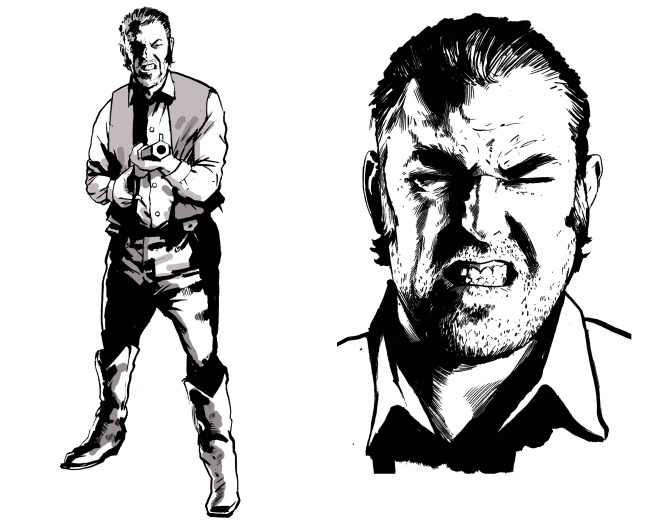
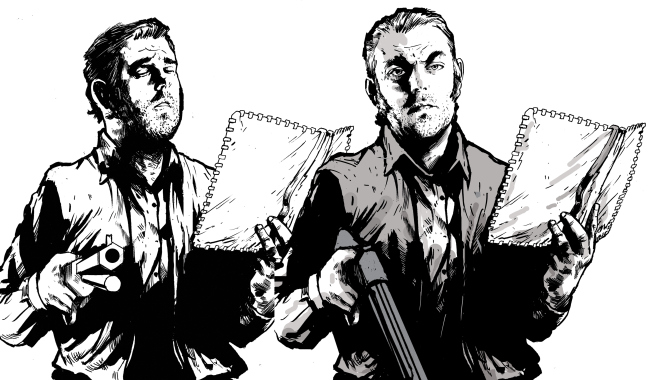
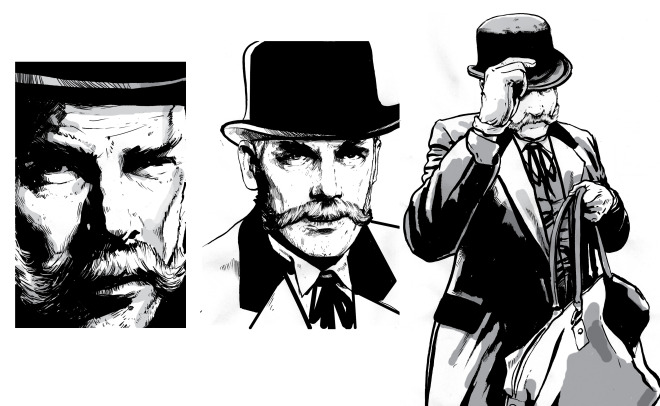

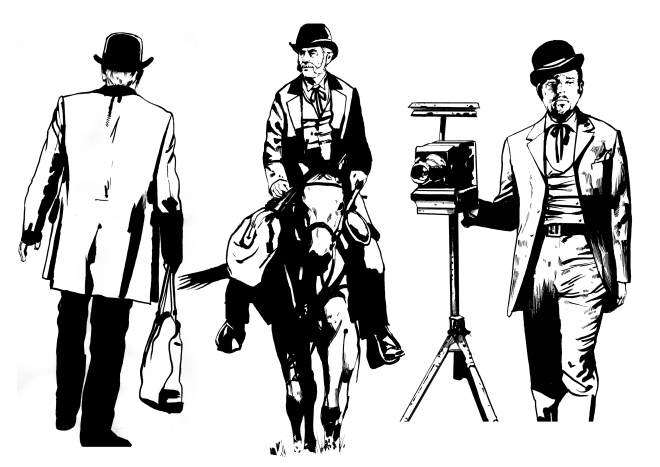
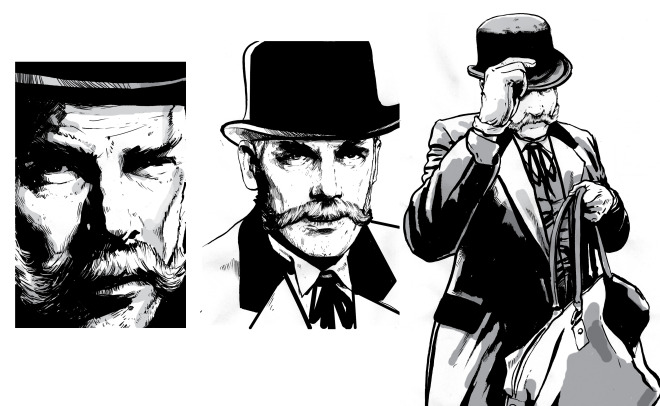
Howdy Partners! Artwork for Forthcoming Accent UK Comic book, Tales of WesterNoir, Issue 2
Some artwork soon to be published in Accent UK‘s very successful western series, Tales of WesterNoir Issue 2. (minus the lettering of course) Always great to have some artwork published by Accent. Both WesterNoir Issue 6 and Tales Of WesterNoir Issue 2 are in production. Dave West has posted over on his blog StrangeTimes:
“Both, WesterNoir Issue 6 and Tales Of WesterNoir Issue 2 are in production. ‘Tales of’ has two new artists to the series, Joe Campbell (who illustrated: Missing : Have You Seen The Invisible Man) has illustrated a story by Gary Crutchley…and Mal Earl (who produces the inspired Bulletproof Nylon) has illustrated a story by myself. Two very different styles, both featuring Jim Wilson, making for a very interesting read. Gary is working on the cover for this book and we’ll get it in print as soon as we are able to.”
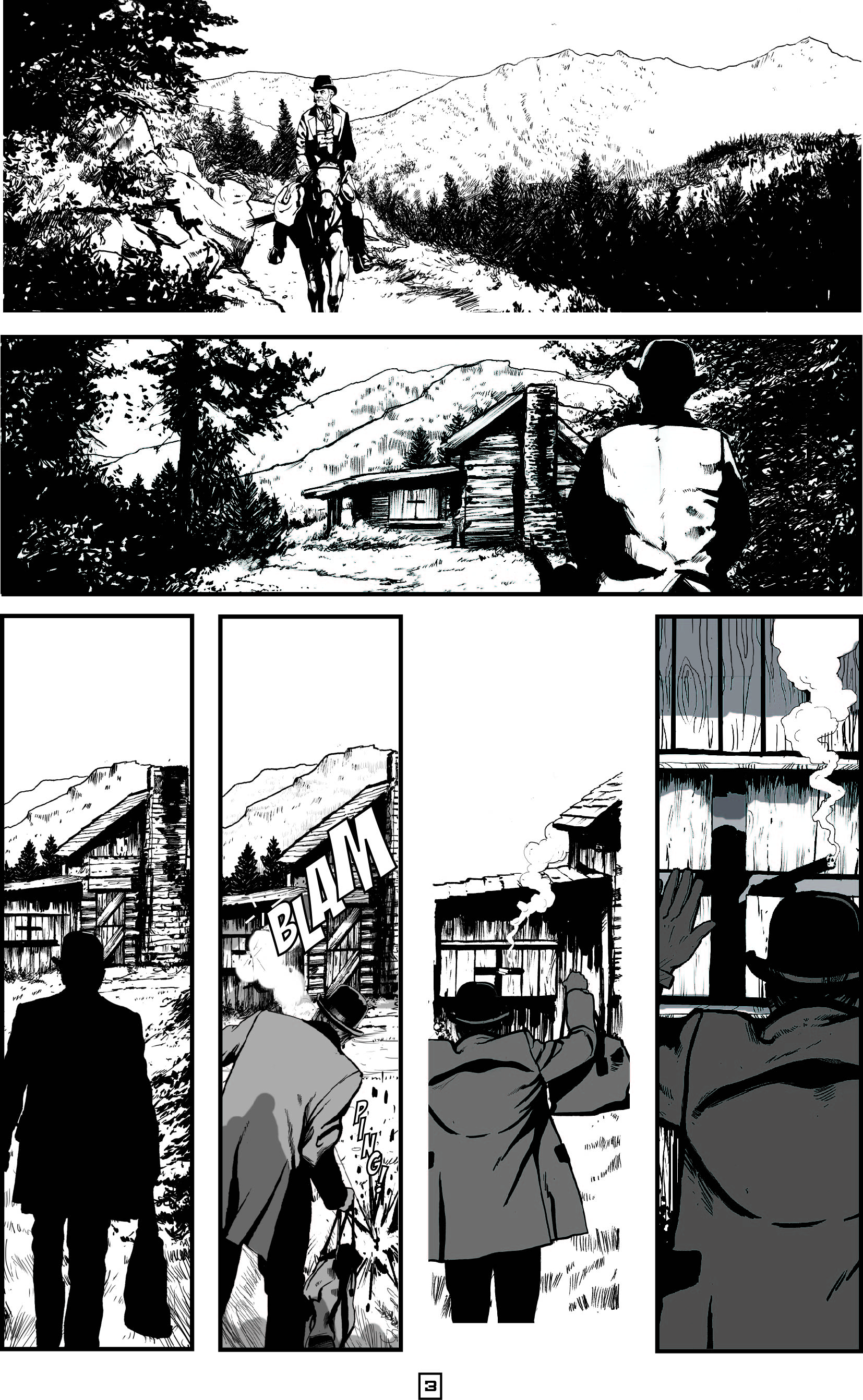
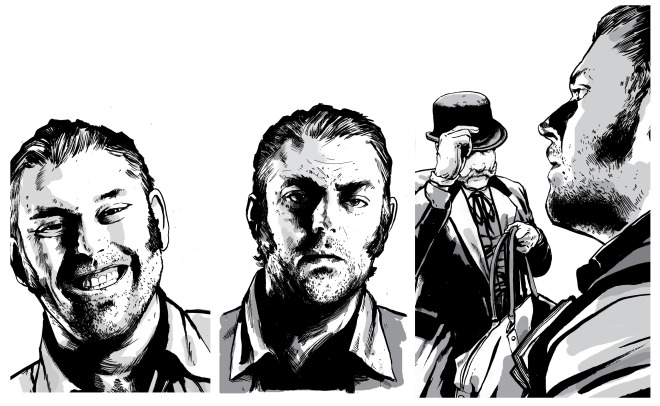
Here are some bits and pieces, some extracts, backgrounds, separate layers, figures, etc…
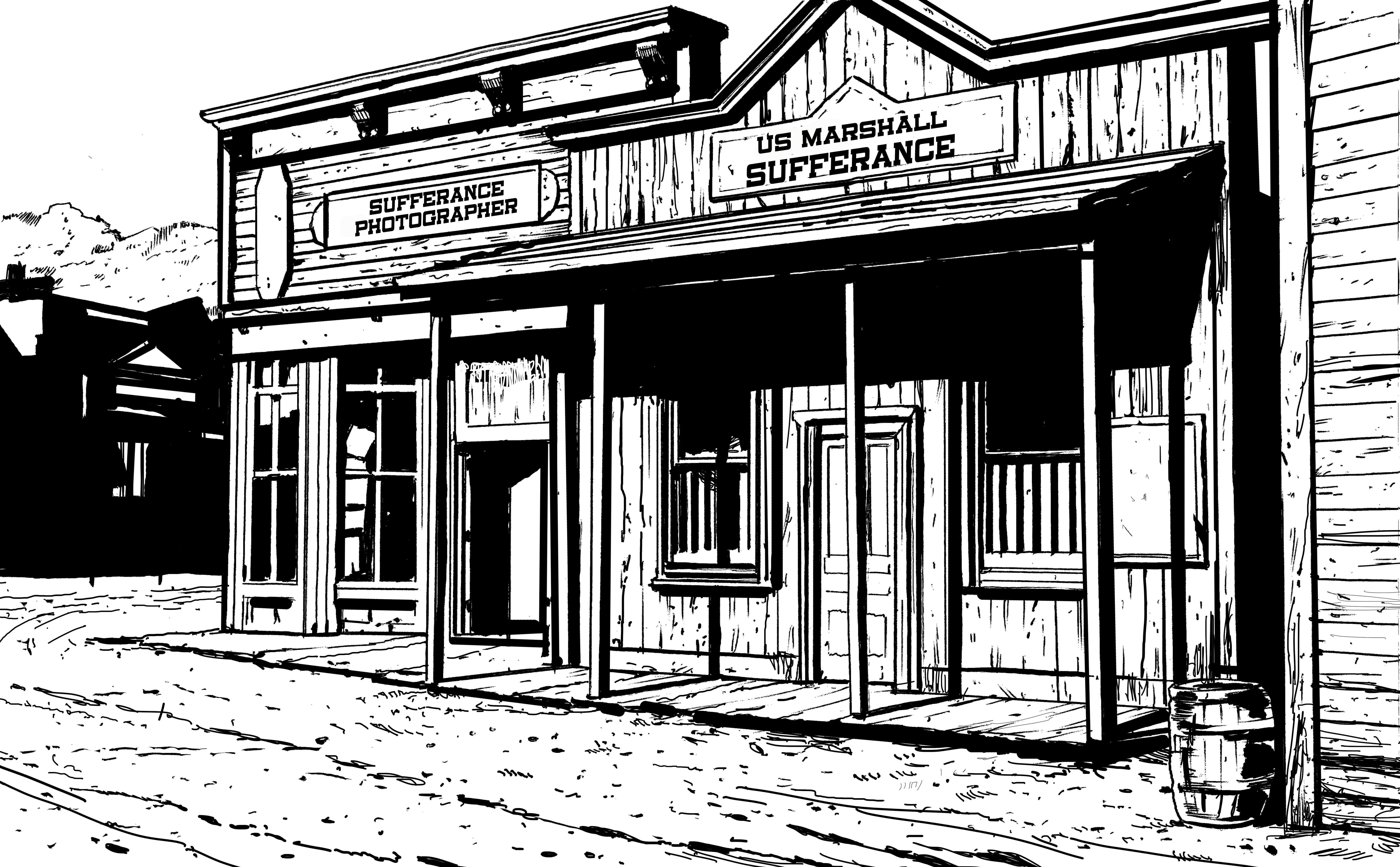
The town of Sufferance
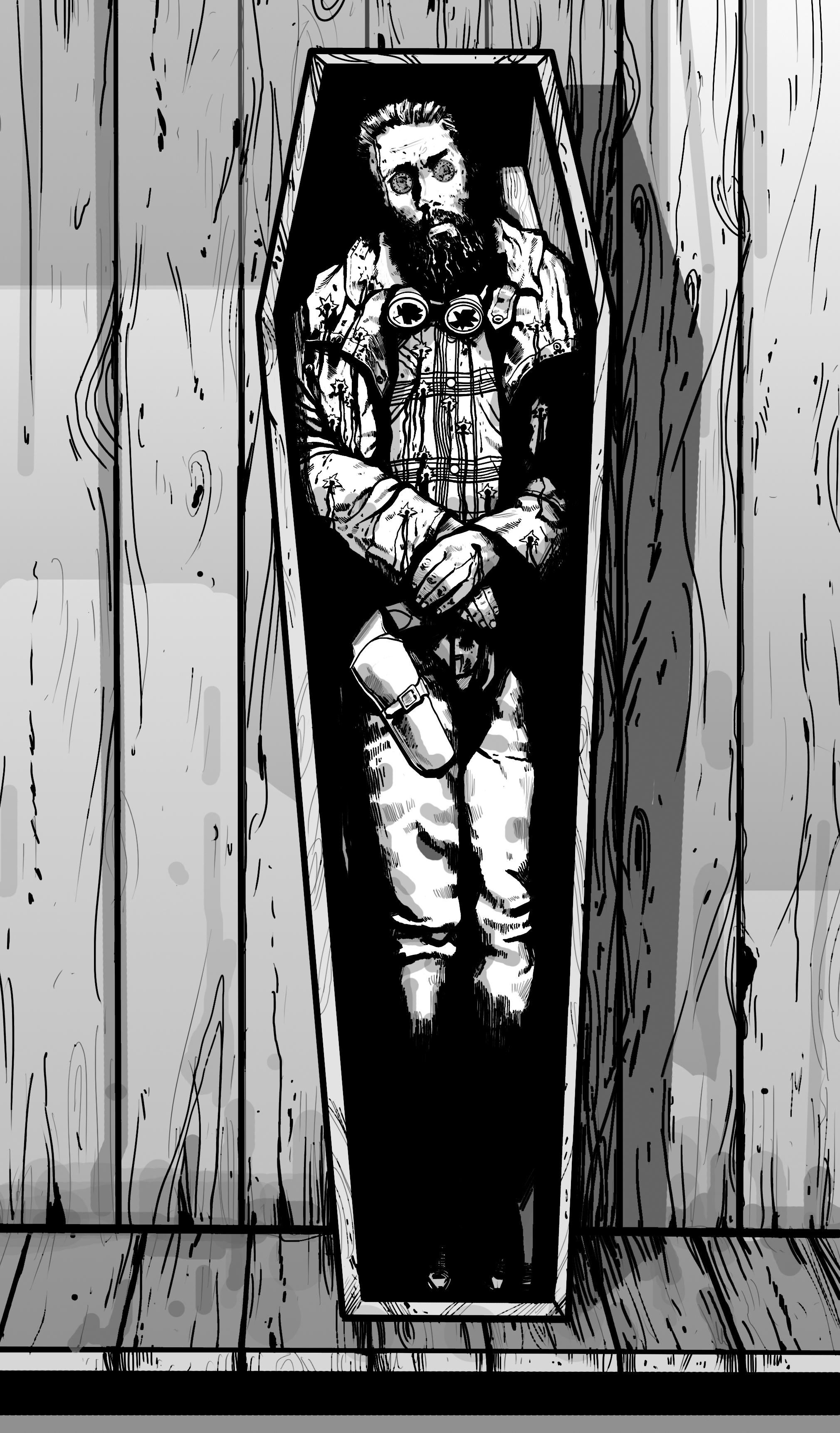

More to follow…
 joecampbellart