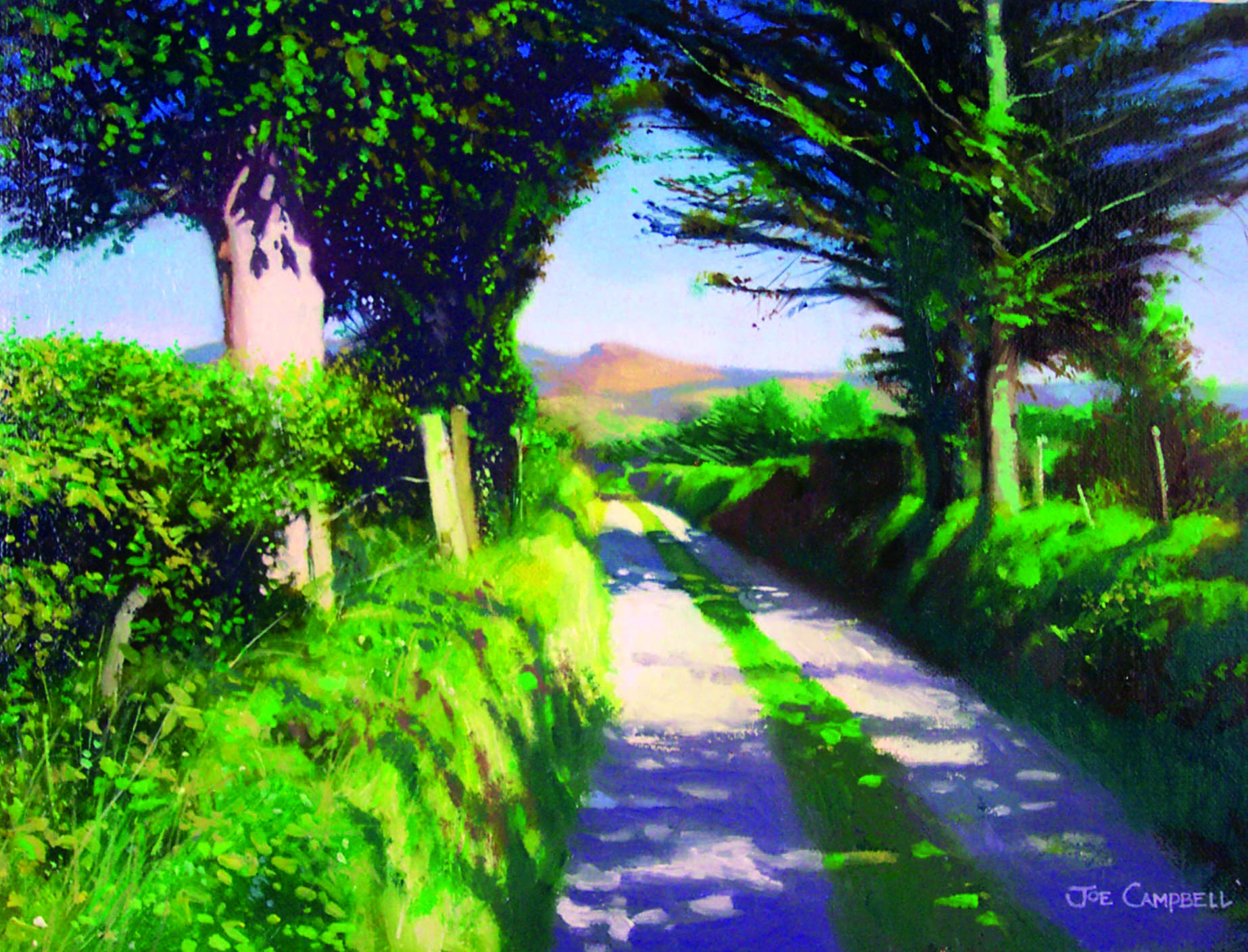
Summer lane in the Donegal Highlands

Summer in the Donegal Highlands

Came across this wee road whilst up in the Donegal Highlands. When I say “road” it was no more than a track really. It probably looked like that a hundred years ago, seemed to be frozen in time. I got the sense that if I kept on walking I’d never round that bend. This was a summers day and that meant one thing to a painter prospecting for subjects and views – colour. The colours that day really sang. I could see the potential of this for a painting. The foreground had these beautiful trees that cast deep purple shadows across the lane. The lines of the laneway took up much of the foreground then led the eye up and into the mid ground where the shadows deepened. Finally, the eye rested on the distant hills that could be just glimpsed in the far distance. A real find indeed…

Summer lane in the Donegal Highlands

Graphic Novel from Joe Campbell & Dave West: Accent UK Comics; Buy Now @www.accentukcomics.com only £3.50

Layout 1 (Page 1)

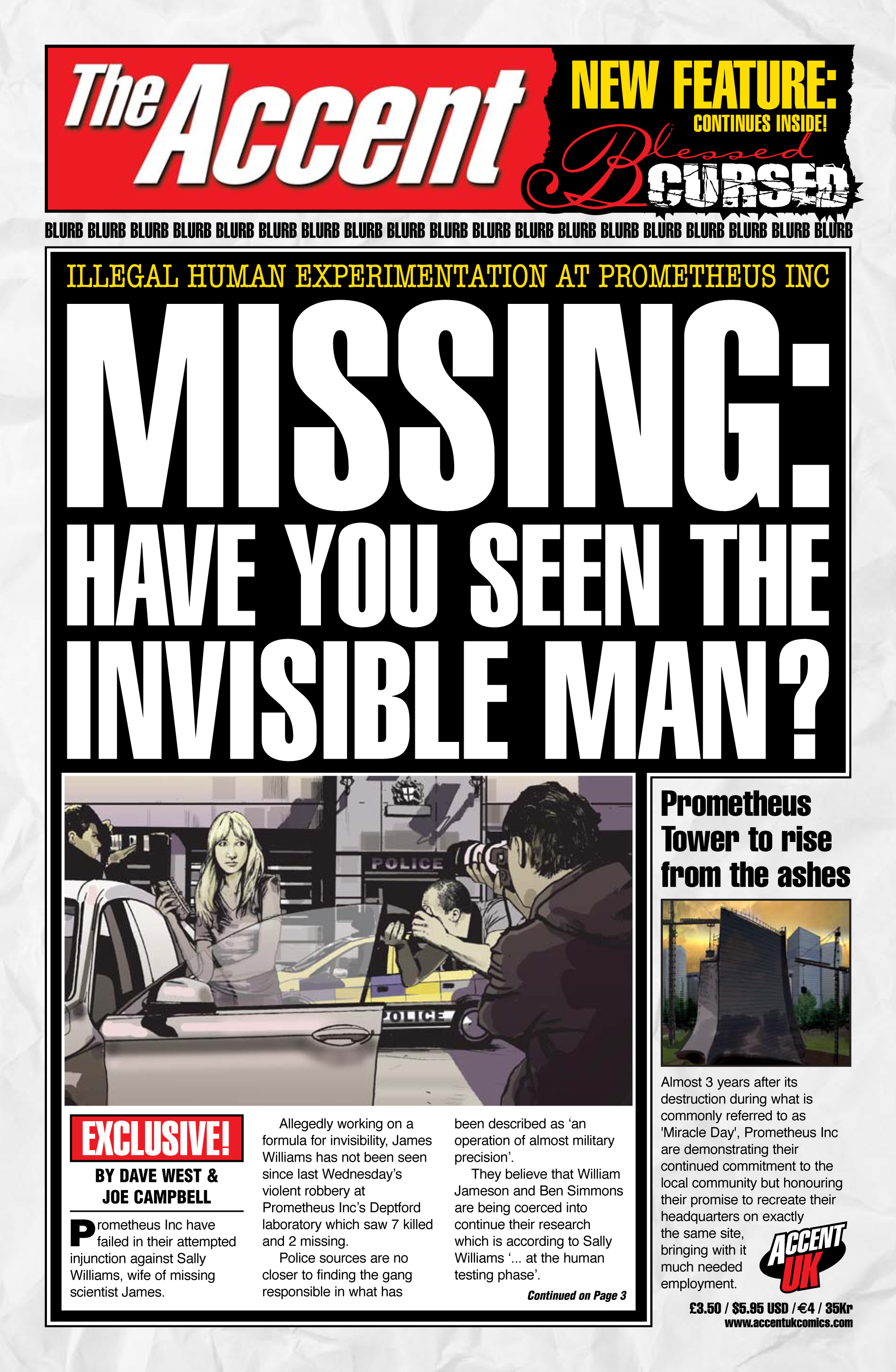
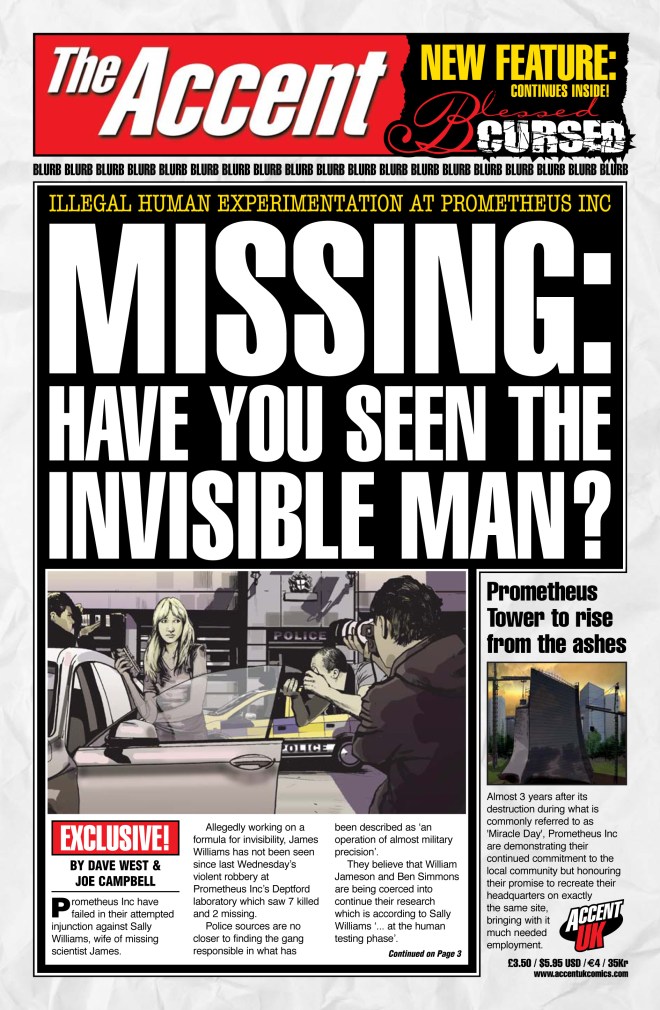
Missing: Have You Seen the Invisible Man: 32 page Graphic novel written by Dave West, (Eagle Award Winner 2009) Artwork by Joe Campbell. Available from Accent Uk.

Order now from web store: http://www.accentukcomics.com only £3.50

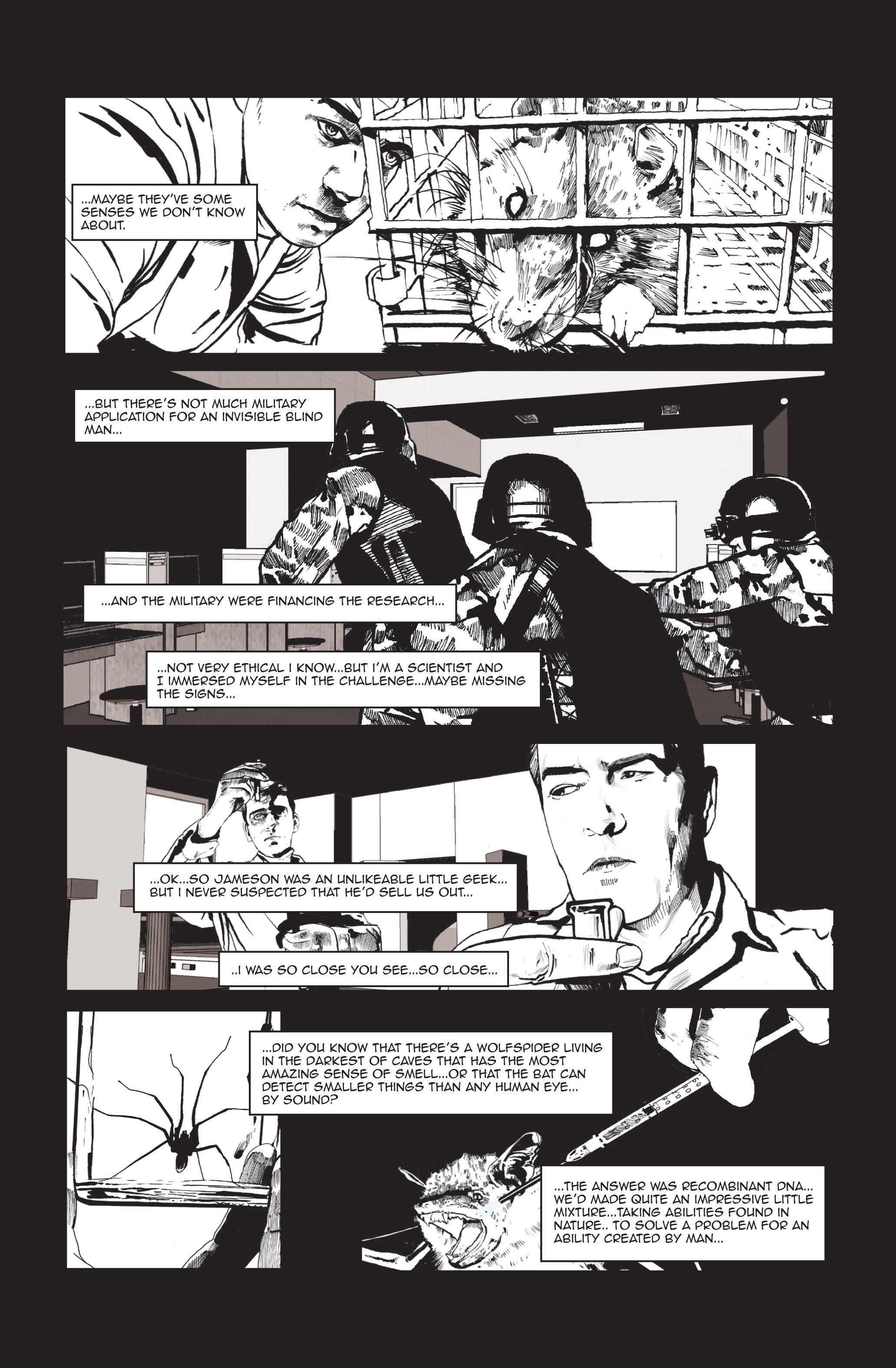
In the follow up to the Eagle Award-winning ‘Whatever Happened To The World’s Fastest Man?’, we see James Williams develop an invisibility formula. His concerns however that his research might fall into the wrong hands are well founded and he turns to his own formula in order to escape.

page 1 invisible man
Review

Accent UK are fast turning in to one of my favourite publishers in the UK comic book scene with some of their utterly superb releases such as ‘WesterNoir’ and ‘Whatever Happened To The World’s Fastest Man?’ that really stand head and shoulders above the rest of the UK comic book publishers out there today.

After reading ‘Whatever Happened To The World’s Fastest Man?’, I had some really high hopes for this and I came away from it without being disappointed.
There have been many versions of the invisible man theme and this one adds to that in a really good way.  While the idea of a scientist wanting to make invisibility a reality only for it to come close to falling in to the wrong hands isn’t a new one in the slightest, the writing by Dave West really puts it across in a really interesting way.
page 1 invisible man
The characters here really come across as interesting despite there not being too much back story.  Normally the lack of back story would annoy me yet the intelligence and pacing really move the story along and hook the reader in.  I would have liked the story itself to be a bit longer but what we have here is interesting and really comes across as a great addition to the invisible man genre of the science fiction world.
One of the great things about this story is the art by Joe Campbell.  It really gels in with Dave West’s writing and gives it an almost photo realistic look with it’s stark and haunting art.  Some of the panel work here gives it a look that wouldn’t look out of place in a television series or even a movie.  I’d not been all that familiar with Campbell’s work but after reading this, I’ve had a great time looking up some of his other work and definitely think he deserves a more higher profile than he has because he has a great and distinctive style.
page 1 invisible man
While I preferred ‘…Fastest Man’ and ‘WesterNoir’, this one is a fantastic story with some great pacing, haunting artwork and intelligent writing by Dave West.  If you are looking for a great title to show just how good the British comic book scene is then you could do a lot worse than one of the Accent UK releases such as this one.
Graphic Novel from Joe Campbell & Dave West: Accent UK Comics; Buy Now @www.accentukcomics.com only £3.50

Resplendent Stained Glass by Joe Campbell: St. Mary’s Killybegs, Ireland

composite resurection window

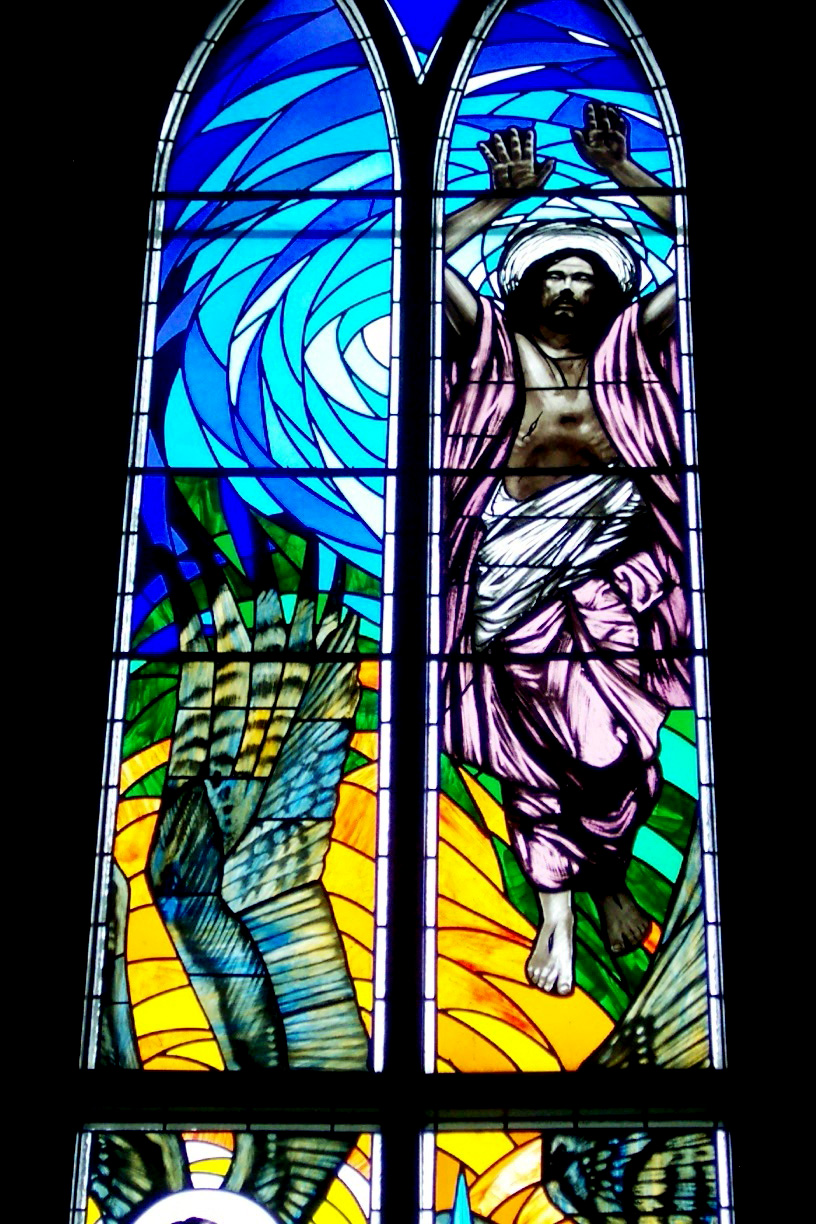
This is a stained glass window I designed sometime around 1997/98. The studio was Art Glass in Derry. I would have designed and painted the window whilst the studio, obtained the contract, supplied: the materials; craftsmen to build it; manufacture and installation. The window is on the theme of The Resurrection. This is a big window (one of two) easily over 30ft high. and about 4ft wide.

The weight of such a window with its hundreds of bits of individual glass would also be significant. To get round this the window is divided into 15 individual panels. these are independently supported by being tied to bars which run horizontally across the window.

Of course this also has a bearing on the design of the window. You have to factor these bars into your drawing (or cartoon) as you go along. You also have to keep in mind that although the window is over 30ft long it is only 4ft wide. All the characters and the story have to fit inside these dimensions. Although the initial designs and ideas are done on standard A4 or A3 to scale, to build the window I would have had to produced an actual size finished drawing with all the detailed artwork, support bars and leads included. From that another drawing called the “cutline” drawing is produced. The cutline drawing is used by the glass cutter to cut out the individual bits of coloured glass. I then lay the bits of glass back down over my original drawing and trace the artwork on to each individual piece of glass.

Each piece of glass is “painted” with a special mix of lead oxides (not paint). These stained glass “paints” will survive the firing process. Each piece of glass to be painted must be fired in a kiln (sometimes twice) The kiln heats the glass up to about 600/700 degrees. The glass becomes molten and the “paint” fuses into the glass itself. The kiln is turned off and when the glass cools the two image is contained within the glass. This is the reason that stained glass lasts so long. Some of the great cathedrals of Europe such as Chartres date back to the 12th and 13th centuries. Although, recently, it has been noted during restorations that perhaps the recent phenomena of car exhausts is beginning to decimate stained glass.

Detail: Bottom view of bottom section

The artwork (starting from the bottom) features the two sleeping Roman guards outside the tomb of Christ. A good friend (now sadly passed away) Dee McFadden posed for these figures. I can still remember the craic we had looking at the resulting photos since Dee dressed up in towels and anything to hand to get the Roman soldier pose. Still can’t look at this window without thinking about him. Above the two soldiers are two angels. They keep the soldiers asleep as Christ rises resplendently above them out of the tomb.

Detail: Top Section
Detail: Top Section
Resplendent Stained Glass by Joe Campbell: St. Mary’s Killybegs, Ireland

Cool Phil Lynott Poster and Poem by Joe Campbell

NEW DESIGN


This is the final version of My Phil Lynott poem: Phil. This will form part of a new planned  publication featuring Irish musicians past and present. Please like and follow if you want to see more…

Cool Phil Lynott Poster and Poem by Joe Campbell

Free Comic:War of the Worlds Short Story

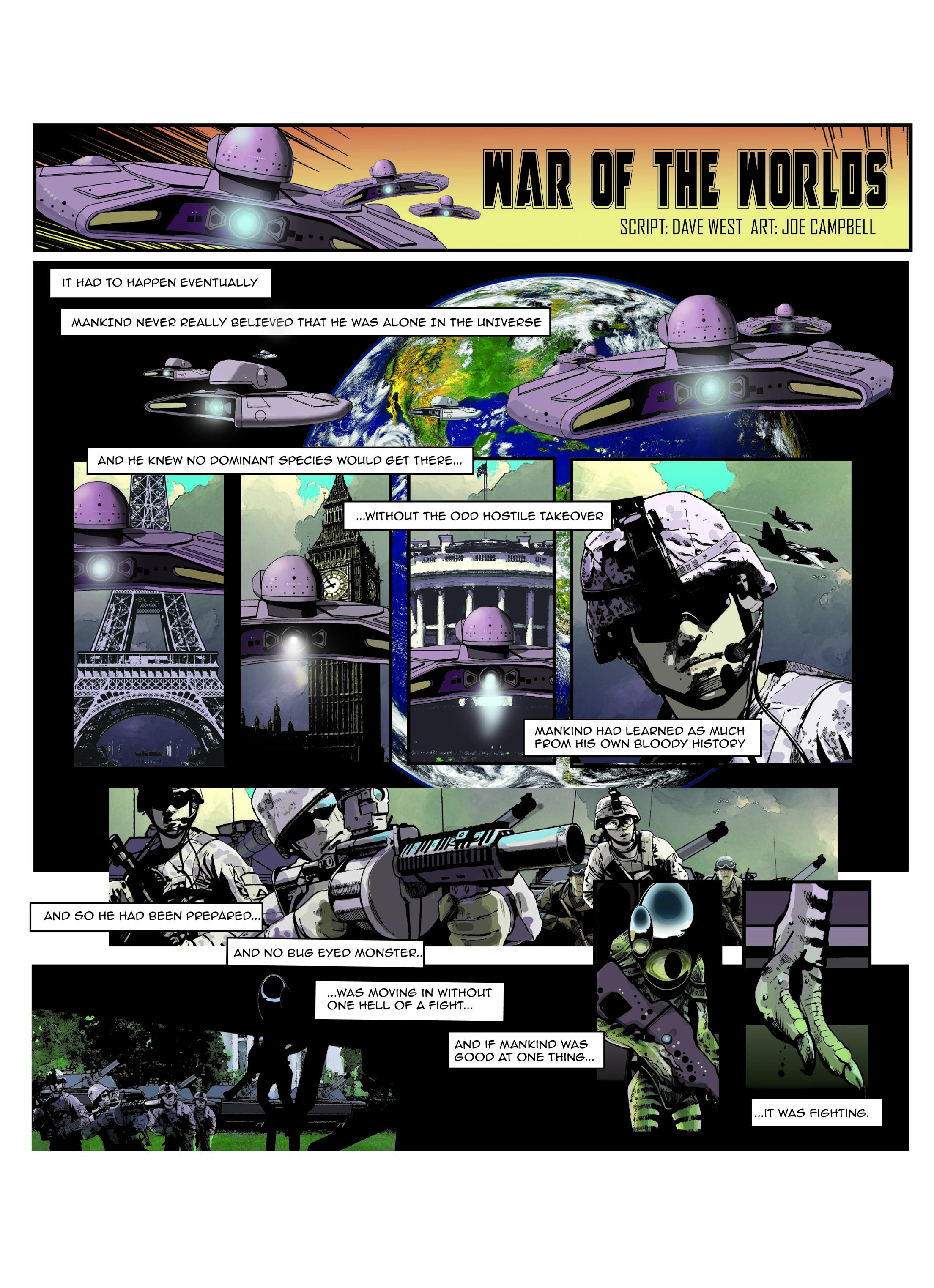
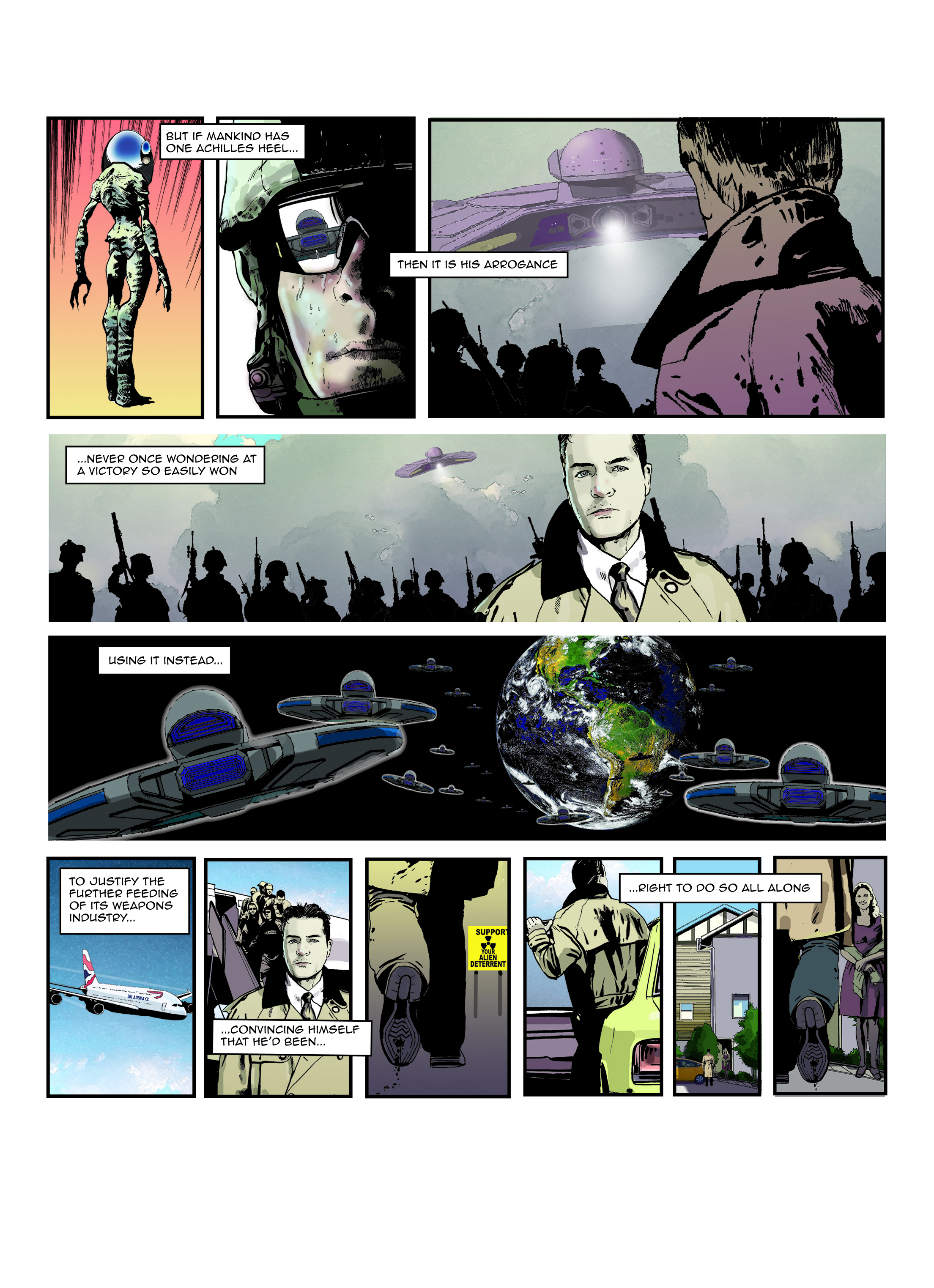
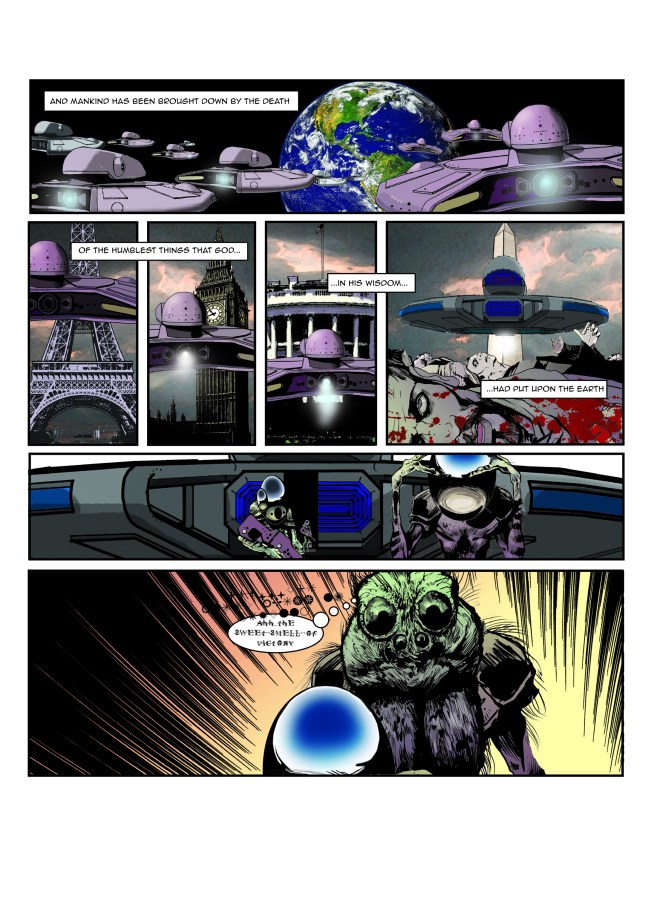
Writer: Dave West: Accent UK Artwork: Joe Campbell
Page 2: Writer Dave West, Accent UK: Artwork: Joe Campbell

PAGE 3 FOR BLOGPAGE 4 FOR BLOG


Free Comic:War of the Worlds Short Story

Striking Rory Gallagher Artwork

POSTER 1 copy

Rory’s Strat

Rory, gracious virtuoso
Grounded in modesty
Loud, solo and true
Setting light to the crowd
Hammered, driven blues
Blood, sweat and torn apart
Bedecked in denim
Flat out, heart-burst

Caustic fingers
Danced on the board
Of a worn 61’ Strat
A treble-boosted, life partner
Customised, modified and re-wired
Tube screamed and twinned
Sunburst at one stage
Pitted and eroded
Stained, stripped and exposed
Down to the grain
Sleeps now
Widowed
Glass-cased and silent
Good night
Hope you enjoyed it

Go back

Your message has been sent

Warning
Warning
Warning
Warning

Warning.

Striking Rory Gallagher Artwork

Cool Phil Lynott Artwork

These are a series of pen and inks of Rock Stars well… Irish rock stars, well… Irish rock stars that meant a lot to anyone who was young during the 1970s in Derry, N.Ireland, which was actually a bad place to be as it was a war zone at the time. It was the height of the Northern Irish “Troubles”. We did our best to ignore all that. In the midst of that mayhem we choose to listen to music instead and tried to be “young”

These particular performers meant more than most. They represented something akin to normality and notions of free-thought. Not just that, they had also made it out of Ireland and on to a world stage. What they expressed at that time was the antithesis of the Republican and Loyalist doctrines that swallowed up so many vulnerable minds.These are actually pen and ink illustrations to accompany new (as yet unpublished) poems. So I’ll include the poetry here as well:

Philo

Phil, vagabond and rocker
Playboy of the Western World
Poet, holder of our dreams
M16 rock
Machine-gun blues
Drilling a bore-hole
Through walls of indifference
Through the Northern Taliban pall
Through our hearts and through the wall
Lizzy – loud, live and dangerous
Twin-guitared, guttural
Over-driven purveyors of precision
Rat-tatted, staccato riffs
Razor edged and riven
Driven through our heads
A delicious distortion
Of all that was holy

phil 1

Cool Phil Lynott Artwork

Stained Glass Windows Designs by Joe Campbell: Granaghan, N.Ireland

Crucifixion panel

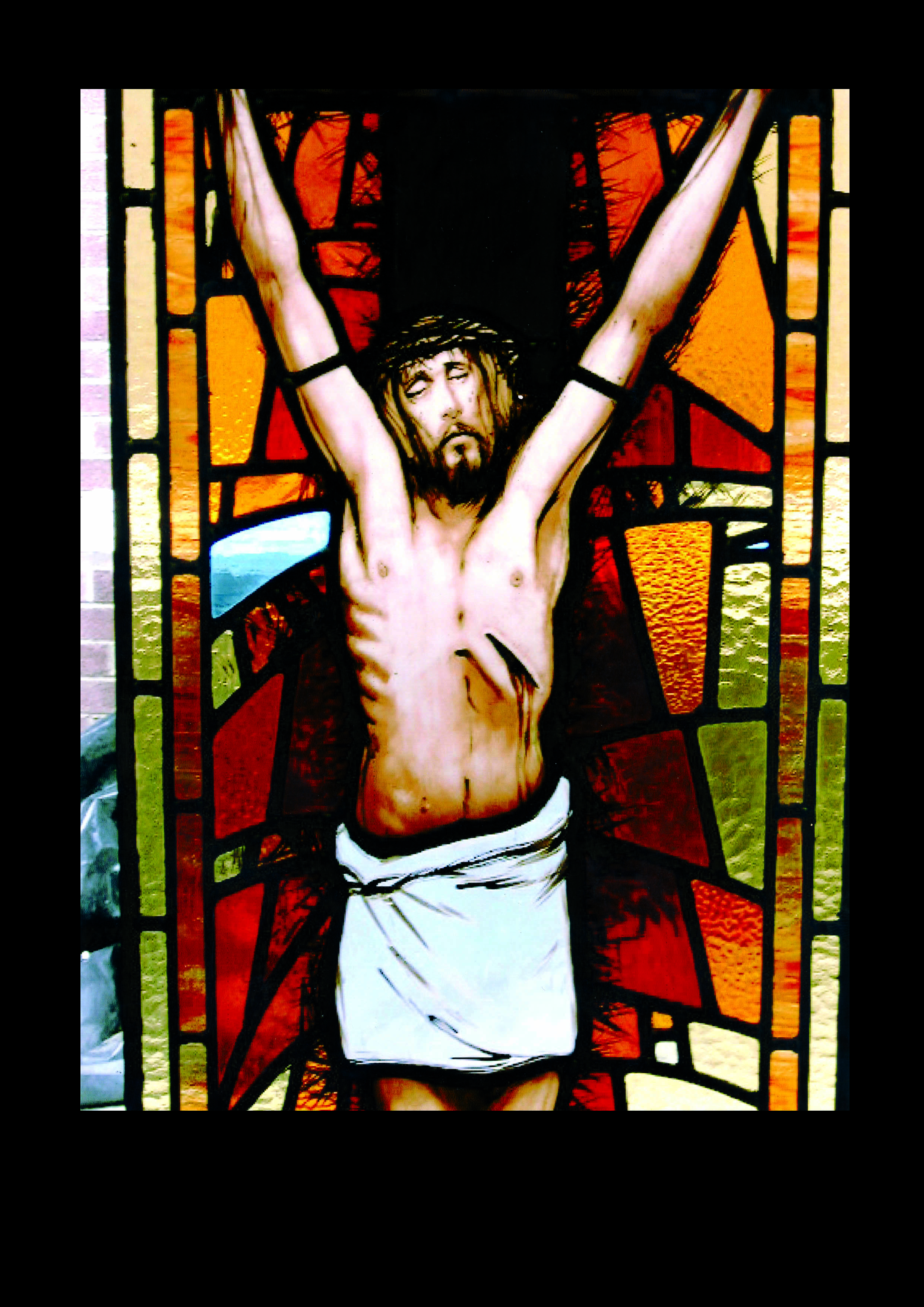
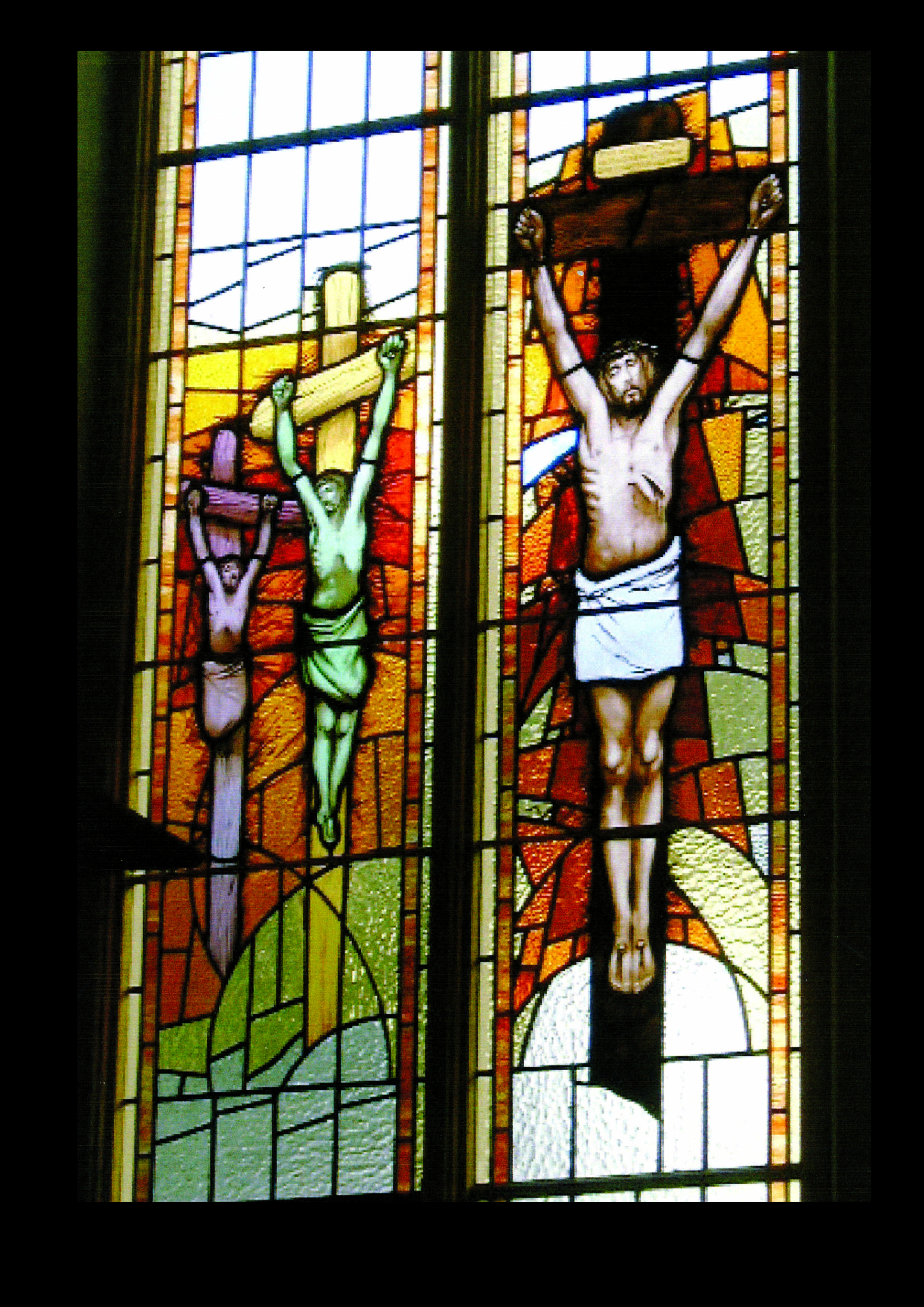
This is a detail (full window below) of one of ten stained glass windows I designed for Granaghan Chapel circa 2001/2002. I worked as a stained glass artist for Topglass at the time, a glass company based in Maghera. I designed and painted the scenes and the company assisted in that process and installed the finished window. The theme of the windows was, The Miracles of Christ. This was the centre panel for the Crucifixion window. This particular panel was about five foot high. You can see how it fits into the design below.

Cost was kept down by using coloured glass around the painted figures. The more hand-painted pieces in a window the more expensive it is. Also there’s nothing natural about the position of Christ’s arms. They have to be raised at a sharp angle to fit into the scene.Also, the leads around the figure run upwards and inwards to lead the eye up to the face of Christ. The two thieves, who were crucified along with Christ, are also depicted and rather than have the whole scene on one window, the scene was run across two window sections (known as “lights.”)

These particular windows in common with many church windows were very long and narrow. I would say from top to bottom we are looking at 30 ft. This throws up all sorts of design and cost problems. In this case the architect wanted to minimise cost by retaining most of the original clear glass to allow as much light into the chapel as possible. The design solution was to find a way for the new artwork to “flow” into the original clear glass. As you can see I had to pay attention not just to the design and artwork but how each scene blended into the original Victorian window.

Crucifixion

Stained Glass Windows Designs by Joe Campbell: Granaghan, N.Ireland

Crossing Borders by Joe Campbell published by Guildhall Press

Crossing Borders by Joe Campbell published by Guildhall Press.

cover

Crossing Borders by Joe Campbell published by Guildhall Press

Philo: New Poem and Illustration about Phil Lynott

Philo

Phil, vagabond and rocker
Playboy of the Western World
Poet, holder of our dreams
M16 rock
Machine-gun blues
Drilling a bore-hole
Through walls of indifference
Through the Northern Taliban pall
Through our hearts and through the wall
Lizzy – loud, live and dangerous
Twin-guitared, guttural
Over-driven purveyors of precision
Rat-tatted, staccato riffs
Razor edged and riven
Driven through our heads
A delicious distortion

Go back

Your message has been sent

Warning
Warning
Warning
Warning

Warning.

Of all that was holy

Philo: New Poem and Illustration about Phil Lynott